
Welcome to the Journey: Exploring the Word
A COPE Ministry Study Guide
As you scroll through these notes, ask the Holy Spirit to speak to you. If you feel a “nudge” in your heart, that’s God inviting you into a deeper relationship.
Book of 1 Corinthians: Chapter by Chapter Overview
Author: PAUL (The Apostle)
Written: Approximately AD 53–55 from Ephesus.
Written For: The church in Corinth and all who call on the name of the Lord.
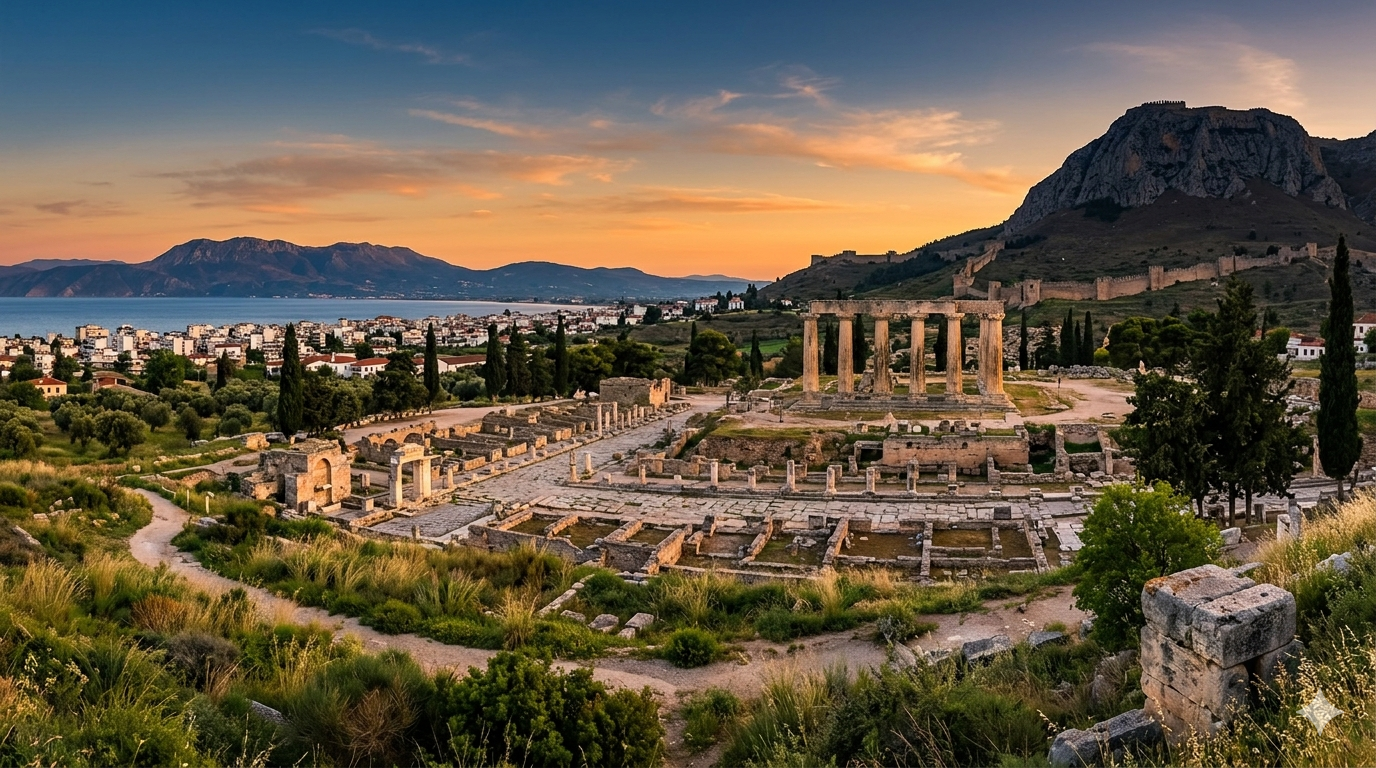
Where: Ancient Corinth (a major Greek port city).
Why: To correct errors in the church, answer specific questions, and call believers to holiness.
Structure (16 Chapters): * 1–4: Addressing Divisions and Human Wisdom.
- 5–10: Addressing Immorality and Personal Freedom.
- 11–14: Addressing Worship, Spiritual Gifts, and Love.
- 15–16: The Resurrection and Final Instructions.
1 Corinthians Chapter 1: Christ the Power and Wisdom of God
The Problem of Factions • The Foolishness of the Cross • God’s Chosen People Timeline: Mid-50s AD Location: Written to Corinth from Ephesus
1. A House Divided (Verses 10–17)
Paul wasted no time addressing the “cliques” that had formed in the church.
- The Reports: Paul heard from Chloe’s household that there were quarrels. People were dividing themselves based on their favorite preachers: “I follow Paul,” “I follow Apollos,” or “I follow Cephas (Peter).”
- The Correction: Paul asks, “Is Christ divided?” He reminds them that he didn’t die for them, and they weren’t baptized into his name. Our focus must remain on the One who was crucified.
2. The Message of the Cross (Verses 18–25)
The world looks for “logic” or “miracles,” but Paul points to the Cross.
- The Divide: To those who are perishing, the Cross looks like foolishness. But to those of us being saved, it is the power of God.
- God’s Logic: Human wisdom cannot find God. He chose the “foolish” things of the world (like a crucified Savior) to shame the wise.
3. Boasting in the Lord (Verses 26–31)
Paul reminds the believers of where they came from.
- The Reality: Not many of them were influential or “nobly born” by worldly standards.
- The Purpose: God chose the lowly and despised so that no one could boast in His presence. If we are going to boast, we boast in what Jesus has done for us.
Themes of Transformation
- Unity Over Personality: In Wakefield, it’s easy to get attached to a specific person or a specific style of ministry. But transformation happens when we realize that every leader is just a servant. We don’t follow “men”; we follow the Christ they preach.
- The Power of the Simple Gospel: You don’t need a PhD to be transformed. The “foolishness” of the Gospel—that Jesus died for your sins and rose again—is enough to change the hardest heart. If you feel “lowly” or “despised” by society, remember that you are exactly the kind of person God loves to use.
- A New Foundation: Transformation shifts our confidence. We stop trying to prove how “wise” or “good” we are and start resting in the fact that Jesus has become our wisdom, righteousness, holiness, and redemption.
1 Corinthians Chapter 2: The Spirit’s Revelation
The Message of the Cross • Wisdom from the Spirit • The Mind of Christ
Timeline: Mid-50s AD Location: Written to Corinth from Ephesus
1. Not with Eloquence, but Power (Verses 1–5)
Paul reminds the Corinthians that when he first came to them, he didn’t use big, fancy words or intellectual arguments.
- The Strategy: Paul resolved to know nothing while he was with them except Jesus Christ and Him crucified.
- The Weakness: He admits he came in weakness, with great fear and trembling. He didn’t want their faith to rest on human wisdom.
- The Demonstration: His preaching was not with persuasive words, but with a demonstration of the Spirit’s power. He wanted their faith to rest on God’s power alone.
2. God’s Secret Wisdom (Verses 6–10)
Paul explains that there is a “wisdom” for the mature, but it isn’t the wisdom of this age or the rulers of this world.
- The Hidden Mystery: God’s wisdom was hidden and destined for our glory before time began.
- The Failure of Man: If the “rulers of this age” had understood it, they would not have crucified the Lord of Glory.
- The Revelation: Paul quotes Scripture: “No eye has seen, no ear has heard…” but then clarifies that God has revealed these things to us by His Spirit.
3. The Mind of Christ (Verses 11–16)
Paul explains why the world “just doesn’t get it” and why the believer can.
- The Spirit’s Search: Just as only a person’s own spirit knows their thoughts, only the Spirit of God knows the thoughts of God.
- The Natural Person: Someone without the Spirit cannot accept the things of God; they think it’s foolishness because these truths are “spiritually discerned.”
- The Gift: We have not received the spirit of the world, but the Spirit who is from God. Because of this, Paul concludes with the powerful statement: “But we have the mind of Christ.”
Themes of Transformation
- Power Over Personality: Sometimes we worry that we aren’t “clever” enough to share our testimony in Wakefield. Paul shows us that it’s not about our “eloquent speech” but about the Holy Spirit’s power. Transformation happens when we stop trying to be impressive and start being obedient.
- A New Way of Seeing: Before we knew Christ, the Bible might have seemed like nonsense. Transformation is like someone “turning the lights on.” The Holy Spirit gives us the ability to understand God’s heart and see our lives through His eyes.
- The Mind of Christ: Having a “New Beginning” means getting a “New Mindset.” We no longer have to be controlled by the old, toxic thoughts of our past. We can actually think and react the way Jesus would, because His Spirit lives within us.
1 Corinthians Chapter 3: Builders on the Foundation
Milk vs. Meat • The Only Foundation • God’s Temple
1. Spiritual Infants (Verses 1–4)
Paul returns to the issue of the “cliques” in Corinth, but this time he gets personal about their growth.
- The Diet: Paul says he couldn’t speak to them as “spiritual” people but as “infants in Christ.” They were still on “milk” (basic truths) because they weren’t ready for “solid food” (deeper spiritual maturity).
- The Evidence: How did he know? Because there was still jealousy and quarreling among them. Acting like the world proves we aren’t letting the Spirit lead.
2. Co-Workers with God (Verses 5–15)
Paul uses the image of a farm and a building to show how ministry works.
- The Roles: Paul planted the seed, Apollos watered it, but God made it grow. Neither the one who plants nor the one who waters is anything—only God matters.
- The Foundation: There is only one foundation that can be laid, and that is Jesus Christ. * The Test: We are all building on that foundation. On the Day of Judgment, our “work” will be tested by fire. If we build with gold, silver, and costly stones (things of the Spirit), it lasts. If we build with wood, hay, or straw (human effort), it burns up.
3. You are God’s Temple (Verses 16–23)
- The Warning: Paul reminds the church that together, they are God’s temple and His Spirit dwells in them.
- The Wisdom: Don’t deceive yourselves with “worldly wisdom.” To be truly wise in God’s eyes, you must be willing to look like a “fool” to the world.
Themes of Transformation
- Growing Up in Wakefield: A “New Beginning” isn’t just about starting; it’s about growing. In our walk with God, we can’t stay on “milk” forever. Transformation means moving from being controlled by our emotions and jealousy to being led by the Holy Spirit.
- Building Your Life to Last: Many of us have spent years building lives made of “wood, hay, and stubble”—things that didn’t last and left us broken. When you come to Christ, you start building on the only foundation that can’t be shaken: Jesus.
- The Gardener’s Heart: If you are trying to help a friend or family member in Wakefield find the Lord, remember: you might just be the one “watering.” Don’t be discouraged if you don’t see the harvest yet. God is the one who brings the growth.
1 Corinthians Chapter 4: Servants of Christ
Faithful Stewards • Apostles as Fools • A Father’s Heart
1. Stewards of the Mysteries (Verses 1–5)
- The Job Description: Paul says leaders should be regarded as “servants of Christ” and “stewards of the mysteries of God.”
- The Requirement: The most important thing for a steward is to be found faithful. Paul doesn’t care about being judged by human courts or even his own conscience—only the Lord’s judgment matters.
2. The Spectacle of the Apostles (Verses 6–13)
Paul uses a bit of “holy sarcasm” to check the pride of the Corinthians who thought they were already “kings.”
- The Contrast: The Corinthians felt they had it all, while the Apostles were hungry, thirsty, brutally treated, and homeless.
- The Response: When cursed, the Apostles blessed. When persecuted, they endured. They became the “scum of the earth” for the sake of the Gospel.
3. A Warning from a Father (Verses 14–21)
- Not to Shame, but to Warn: Paul isn’t trying to make them feel bad; he is speaking as their “spiritual father.”
- Power over Talk: Paul warns that when he comes to visit, he doesn’t want to hear their “eloquent talk.” He says, “For the kingdom of God is not a matter of talk but of power.” (v. 20).
Themes of Transformation
- Faithfulness over Success: In our world, we are told to be “successful” or “famous.” But in the Kingdom, God just asks us to be faithful. Whether you are cleaning the floor at the ministry or preaching on the street, God sees your heart.
- Kingdom Power: Transformation isn’t just a new set of rules or “churchy” words. As Pentecostals, we believe what Paul said: the Kingdom is about Power. It’s the power to break addictions, the power to heal broken hearts, and the power to live differently.
- Spiritual Fatherhood: We all need people in our lives who can speak the truth to us in love. Transformation happens in community, where we can be guided by those who have walked the path before us.
1 Corinthians Chapter 5: Dealing with Defilement
A Call to Purity • The Leaven in the Lump • Judging the Church
1. A Crisis of Immorality (Verses 1–5)
Paul addresses a shocking situation: a man in the church was in a relationship with his father’s wife.
- The Pride: Even worse than the sin was the church’s attitude—they were “proud” and “boasting” instead of mourning. They likely thought they were being “tolerant” or “free in Christ.”
- The Judgment: Paul, though absent in body, was present in spirit. He instructs the church to “hand this man over to Satan for the destruction of the flesh, so that his spirit may be saved on the day of the Lord.” This wasn’t about hate; it was about tough love to bring him to repentance.
2. Don’t Let the Yeast Spread (Verses 6–8)
- The Metaphor: Paul reminds them that “a little yeast leavens the whole batch of dough.” If you leave sin unaddressed in the church, it spreads and ruins the whole community.
- The Passover: Christ is our Passover Lamb. We are called to keep the festival not with the “old yeast” of malice and wickedness, but with the “unleavened bread” of sincerity and truth.
3. Who Do We Judge? (Verses 9–13)
- The Boundary: Paul clarifies a previous letter. He isn’t telling them to avoid people outside the church who are struggling with sin—otherwise, they’d have to leave the world entirely!
- The Responsibility: We are called to hold our brothers and sisters in Christ accountable. If someone claims to be a believer but persists in greed, idolatry, or immorality, we cannot treat it as “business as usual.”
Themes of Transformation
- Clean House: In Wakefield, we know that if you want a “New Beginning,” you have to clear out the old rubbish. Transformation isn’t just about adding Jesus to your life; it’s about letting Him clean out the things that are destroying you.
- Protection for the Family: At COPE, we say “Anyone can be saved,” and we mean it! But once we are in the family, we protect each other. True love doesn’t ignore a brother’s destructive path; it speaks the truth to help them find their way back to God’s best.
- The Goal is Restoration: The “judgment” Paul speaks of isn’t to crush someone. It’s to wake them up. God’s heart is always for the “prodigal” to come home.
1 Corinthians Chapter 6: Lawsuits and Living Holy
Settling Disputes • Inheriting the Kingdom • The Body is a Temple
1. Disputes Among Believers (Verses 1–8)
- The Scandal: Church members were taking each other to secular courts to settle petty arguments.
- The Higher Standard: Paul is outraged. “Do you not know that we will judge angels?” he asks. If we are going to rule with Christ, why can’t we settle simple matters among ourselves?
- The Better Way: Paul says it would be better to be cheated or wronged than to bring shame to the name of Jesus by fighting in public courts.
2. “And Such Were Some of You” (Verses 9–11)
Paul lists various sins—wrongdoers, idolaters, thieves, the greedy, drunkards—and states clearly that these will not inherit the Kingdom of God.
- The Great Transition: Then comes one of the most powerful verses in the Bible: “And such were some of you.” * The Work of the Spirit: But you were washed, you were sanctified, you were justified in the name of the Lord Jesus Christ and by the Spirit of our God.
3. Honor God with Your Body (Verses 12–20)
- Christian Liberty: Some were saying, “I have the right to do anything.” Paul responds, “But not everything is beneficial.”
- The Price Tag: Your body is not your own. It was “bought with a price”—the blood of Jesus.
- The Holy Dwelling: Your body is the Temple of the Holy Spirit. Because God’s Spirit lives inside you, what you do with your physical body matters.
Themes of Transformation
- The Power of the Past Tense: Maybe you’ve been a “drunkard,” “greedy,” or “immoral.” Paul says that’s who you were. In Wakefield, people might remember your old reputation, but God sees you as “washed and justified.” That is the miracle of a New Beginning.
- Your Body is Holy Ground: As Pentecostals, we believe the Holy Spirit is a real, dwelling Presence. Transformation means realizing that wherever you go (the pub, the bookies, or the street corner), you are taking the Holy Spirit with you.
- Choosing What’s Beneficial: A transformed life stops asking “Can I get away with this?” and starts asking “Will this bring me closer to Jesus?” We are no longer slaves to our cravings; we are servants of the King.
1 Corinthians Chapter 7: Relationships and Renewal
Marriage and Singleness • Staying as You Are • Devotion to the Lord
1. Principles for Marriage (Verses 1–7)
Paul answers specific questions the Corinthians had about sex and marriage.
- The Gift: Paul explains that marriage is a safeguard against immorality. Husbands and wives should fulfill their duties to one another with love and respect.
- The Balance: While Paul himself was single and saw it as a “gift” because it allowed him to focus entirely on God, he acknowledges that marriage is also a gift from God.
2. Staying with the Lord (Verses 8–24)
- The Unbelieving Spouse: Paul gives powerful encouragement to those whose partners aren’t yet saved. He says the believing spouse “sanctifies” the home. Don’t give up—your life might be the very thing God uses to save your husband or wife!
- The Calling: Paul’s main point here is: “Live as a believer in whatever situation the Lord has assigned to you.” You don’t need to change your social status or your job to be holy; you just need to walk with God right where you are.
3. Living with Eternity in Mind (Verses 25–40)
- The “Shortness” of Time: Paul reminds us that the world in its present form is passing away.
- Undivided Devotion: Whether single or married, our primary goal is to be “undivided” in our devotion to Christ.
Themes of Transformation
- Transformation in the Home: In Wakefield, many people come to Christ while their family members are still “in the world.” Paul tells us: don’t panic. Your transformation is a light in your house. Your kindness, your sobriety, and your peace are powerful witnesses to those you live with.
- No More “Waiting for the Future”: Sometimes we think, “I’ll serve God when I get a better job” or “when I’m married.” Paul shows us that a New Beginning starts exactly where you are sitting today. God wants to use you in your current circumstances.
- Eyes on the Prize: Transformation changes our priorities. We stop living just for the weekend or for earthly comforts and start living for the Kingdom that lasts forever.
1 Corinthians Chapter 8: Knowledge vs. Love
Food Sacrificed to Idols • The Stumbling Block • Love Builds Up
1. Knowledge Puffs Up, Love Builds Up (Verses 1–3)
The Corinthians were arguing about whether it was okay to eat meat that had been offered to idols in pagan temples.
- The Trap of “Being Right”: Some “knowledgeable” Christians said, “Idols aren’t real, so the meat is just meat. I have the right to eat it!”
- The Higher Way: Paul warns that “Knowledge puffs up, but love builds up.” Having the right facts doesn’t matter if you don’t have a heart of love.
2. One God, One Lord (Verses 4–8)
- The Truth: Paul agrees—there is only one God, the Father, and one Lord, Jesus Christ. For the mature believer, an idol is nothing. Food doesn’t bring us closer to God or keep us from Him.
3. Watching Out for the “Weak” (Verses 9–13)
- The Stumbling Block: Paul’s big concern is the “weaker brother”—the person who just came out of idolatry and might be confused or tempted back into sin if they see a leader eating in an idol’s temple.
- The Sacrifice of Rights: Paul concludes that he would rather never eat meat again than cause a fellow believer to stumble and fall back into their old life.
Themes of Transformation
- It’s Not Just About “Me”: Before Christ, we only cared about our own rights and what we wanted to do. Transformation means we start caring about how our choices affect others in our community.
- Protecting the “New Starters”: At COPE Ministry, we see many people taking their first steps in faith. If something we do—even if it’s “not a sin”—makes a new believer struggle or feel tempted to go back to their old ways, love tells us to set that thing aside.
- Love Over Logic: You might “know” you’re allowed to do something, but the Holy Spirit asks: “Is it the most loving thing to do?” Transformation replaces our “rights” with a “responsibility” to help our brothers and sisters stay on the straight and narrow.
1 Corinthians Chapter 9: The Rights of an Apostle
Surrendering Rights • Winning the Race • All Things to All People
1. Giving Up for the Gospel (Verses 1–18)
Paul defends his authority as an Apostle but then reveals something surprising: he hasn’t used any of his “rights.”
- The Worker’s Due: Paul argues that just as a soldier gets paid or a farmer eats from his vineyard, he has a right to be supported by the church.
- The Sacrifice: However, Paul chose to work with his own hands (tentmaking) so that he wouldn’t be a “burden” to anyone. He didn’t want anything to get in the way of people hearing the Gospel for free.
- The Reward: His “payment” was the joy of preaching without asking for a penny.
2. Becoming All Things (Verses 19–23)
- The Strategy: Paul made himself a “slave to everyone” to win as many as possible. To the Jews, he lived like a Jew; to those outside the law, he lived like them (within God’s commands).
- The Purpose: He didn’t do this to be a “fake” person, but to find common ground. “I have become all things to all people so that by all possible means I might save some.”
3. Running for the Prize (Verses 24–27)
- The Discipline: Paul compares the Christian life to an athlete training for the games.
- The Crown: Athletes run for a wreath that withers, but we run for a crown that lasts forever.
- The Warning: Paul beats his body and makes it his slave so that after preaching to others, he himself won’t be disqualified.
Themes of Transformation
- Mission Over Comfort: In Wakefield, transformation means we stop asking, “What can the church do for me?” and start asking, “What can I give up so my neighbor can meet Jesus?”
- Meeting People Where They Are: At COPE Ministry, we don’t wait for people to “clean themselves up” before we talk to them. We go to the streets, the cafes, and the homes. We become “all things” to reach the person who feels “too far gone.”
- Training for the Race: A “New Beginning” requires discipline. Just like an athlete, we have to “train” our spirits through prayer and the Word so we don’t slip back into old habits.
1 Corinthians Chapter 10: Warnings from History
Lessons from the Wilderness • The Cup of the Lord • Do It All for God’s Glory
1. Don’t Repeat the Past (Verses 1–11)
Paul points back to the Israelites in the desert. They all had the “spiritual food” (Manna) and “spiritual drink” (Water from the Rock, which was Christ), but most of them died in the wilderness.
- The Reason: They gave in to idolatry, sexual immorality, and grumbling.
- The Example: Paul says these things happened as warnings for us, so we don’t set our hearts on evil things like they did.
2. The Way Out (Verses 12–13)
- The Warning to the Proud: “If you think you are standing firm, be careful that you don’t fall!”
- The Promise: This is one of the most famous verses in the Bible. No temptation has overtaken you except what is common to man. God is faithful; He will not let you be tempted beyond what you can bear. He will always provide a “way of escape.”
3. Flee from Idolatry (Verses 14–22)
- The Lord’s Table: You cannot drink the cup of the Lord and the cup of demons. You cannot have one foot in the Kingdom and one foot in the “old life.”
4. The Glory of God (Verses 23–33)
- The Final Rule: “So whether you eat or drink or whatever you do, do it all for the glory of God.“
Themes of Transformation
- The Way of Escape: Many people in Wakefield feel “trapped” by their past or their addictions. Paul gives us a huge promise: God always provides a way out. Transformation is learning to look for that “exit door” the Holy Spirit provides when temptation hits.
- No Half-Measures: You can’t have a “New Beginning” if you are still hanging onto the “Old Idols.” To be fully transformed, we have to leave the “cup of demons” (the old lifestyle) behind and sit fully at the Lord’s table.
- Living for an Audience of One: Every choice we make—from how we talk to our boss to what we watch on TV—should be for God’s glory. When our goal is to please Him, the old temptations lose their power.
1 Corinthians Chapter 11: Worship and the Lord’s Supper
Order in Worship • The Significance of the Body • Examining Yourself
1. Roles and Respect (Verses 1–16)
Paul discusses the importance of order and respect during worship gatherings.
- The Example: Paul starts by saying, “Follow my example, as I follow the example of Christ.”
- The Order: While some of the specific cultural customs (like head coverings) were unique to that time, the principle remains: in God’s house, there should be a spirit of order and mutual respect between men and women, acknowledging that we all come from God.
2. The Lord’s Supper (Verses 17–22)
Paul corrects a serious problem: when the church met for the “Love Feast,” the wealthy were eating all the food while the poor went hungry.
- The Scandal: They were turning a holy moment into a divided mess. Paul tells them that this isn’t the Lord’s Supper if they are ignoring the needs of others.
3. Do This in Remembrance (Verses 23–34)
Paul recounts the night Jesus was betrayed.
- The Bread and the Cup: The bread is His body broken for us; the cup is the New Covenant in His blood.
- The Warning: We must “examine ourselves” before taking Communion. We should never take it in an “unworthy manner” by harboring bitterness or creating division in the church. We are one body.
Themes of Transformation
- A New Way of Treating People: In Wakefield, the world often judges you by what you have or where you’ve been. In the Kingdom, all those barriers are broken. Transformation means we treat every person at the table as a brother or sister bought by the blood of Jesus.
- The Power of Memory: When we take the Lord’s Supper, we aren’t just doing a ritual. We are looking back at the Cross (where our “New Beginning” started) and looking forward to His return.
- Self-Examination: Transformation requires honesty. We don’t wait for others to point out our faults; we ask the Holy Spirit to “examine” our hearts so we can stay right with God.
1 Corinthians Chapter 12: Spiritual Gifts & One Body
Diversity of Gifts • The Same Spirit • You are the Body
1. Varieties of Gifts (Verses 1–11)
Paul doesn’t want us to be “uninformed” about spiritual gifts.
- The Source: There are different kinds of gifts, but the same Spirit distributes them.
- The List: These include the word of wisdom, the word of knowledge, faith, healing, miraculous powers, prophecy, discerning spirits, speaking in tongues, and the interpretation of tongues.
- The Purpose: These aren’t for showing off; they are “given for the common good.”
2. One Body, Many Parts (Verses 12–26)
Paul uses the famous analogy of the human body.
- Mutual Need: The eye cannot say to the hand, “I don’t need you!” Every part—even the ones that seem “weaker”—is indispensable.
- Sharing the Journey: If one part of the body suffers, every part suffers with it. If one part is honored, every part rejoices.
3. Your Place in the Body (Verses 27–31)
- The Appointment: God has placed people in the church as apostles, prophets, teachers, and more.
- The Goal: Not everyone has the same gift, but everyone has a role. Paul ends by telling us to “eagerly desire the greater gifts,” but then promises to show us “the most excellent way.”
Themes of Transformation
- You Have a Purpose: Many people in our community feel “useless” or like they have nothing to offer. But the Bible says that if you have the Holy Spirit, you have a gift. Transformation is discovering that God has “placed” you in the body of Christ for a reason.
- No More Loneliness: Before Christ, we were on our own. Now, we are part of a Body. When you struggle in Wakefield, you have a family to stand with you. When you succeed, we celebrate with you.
- Expect the Supernatural: As Pentecostals, we believe the gifts mentioned in Chapter 12 are active today! Transformation means moving from a “dry” religion to a living relationship where the Spirit moves with power to heal and speak to His people.
1 Corinthians Chapter 13: The Most Excellent Way
The Supremacy of Love • The Character of Love • The Permanence of Love
1. Without Love, We Are Nothing (Verses 1–3)
Paul makes a bold statement to a church that was “gifted” but “divided.”
- The Noise: You can speak in the tongues of angels, have the gift of prophecy, and have faith that moves mountains—but if you don’t have love, you are just a “resounding gong” or a “clanging cymbal.”
- The Sacrifice: Even giving everything to the poor or facing martyrdom means nothing if the motive isn’t love.
2. What Love Looks Like (Verses 4–7)
Paul defines love not as a “feeling,” but as an action.
- The List: Love is patient, love is kind. It does not envy, it does not boast, it is not proud. It does not dishonor others, it is not self-seeking, it is not easily angered, it keeps no record of wrongs.
- The Endurance: Love always protects, always trusts, always hopes, always perseveres.
3. Love Never Fails (Verses 8–13)
- The Temporary vs. The Eternal: Prophecies will cease, and tongues will be stilled, but love never fails.
- Growing Up: Paul compares our current understanding to that of a child. One day we will see “face to face,” but for now, we see only a reflection.
- The Big Three: “And now these three remain: faith, hope and love. But the greatest of these is love.”
Themes of Transformation
- A New Heart for Wakefield: Many of us come from backgrounds where “love” was conditional or even abusive. Transformation is learning that God’s love (Agape) is different—it doesn’t keep a “record of wrongs.” When you start your New Beginning, God clears your record, and He asks you to do the same for others.
- Beyond the “Show”: It’s easy to want the “big” spiritual gifts, but transformation is measured by how we treat people when the music stops. Are we patient with the person who is struggling? Are we kind to those who have wronged us?
- The Greatest Goal: At COPE Ministry, we want to see the power of God, but more than that, we want to be a community where people feel the Love of God. That is the greatest miracle of all.
1 Corinthians Chapter 14: Gifts of Prophecy and Tongues
Edification of the Church • Intelligibility in Worship • Orderly Worship
1. Prophecy and Tongues (Verses 1–25)
Paul gives practical instructions on how to use spiritual gifts when the church meets.
- Building Up: The goal of every gift is to “edify” (build up) the church.
- The Difference: Tongues are primarily for personal prayer between you and God, but in a meeting, Prophecy is “greater” because it speaks to people in a way they can understand, bringing encouragement and comfort.
- The Outsider: Paul wants our worship to make sense to someone coming in off the street. If everyone is speaking in tongues at once, a visitor might think we are “out of our minds.” But if someone prophesies, the secrets of the visitor’s heart are laid bare, and they will fall down and worship God!
2. Order in the Service (Verses 26–40)
- Everything in Order: Paul provides a “blueprint” for a meeting: someone has a hymn, a word of instruction, a revelation, a tongue, or an interpretation.
- God is Not a God of Disorder: There is no room for chaos. Only two or three should speak in tongues (with an interpreter), and prophets should speak one at a time.
- The Summary: “Be eager to prophesy, and do not forbid speaking in tongues. But everything should be done in a fitting and orderly way.”
Themes of Transformation
- Speaking Hope: Transformation happens when we use our words to build others up. In Wakefield, there is enough “criticism” and “gossip.” In the church, we use the gift of prophecy to speak God’s life and purpose over people who feel hopeless.
- The Mind and the Spirit: As Pentecostals, we love the “fire” of the Spirit, but Paul reminds us to pray with our “spirit” and with our “understanding.” Transformation involves our whole being—our hearts and our heads.
- Welcoming the Seeker: When we use God’s gifts correctly, they aren’t “weird”—they are powerful. Transformation is when a visitor walks into COPE Ministry and realizes, “God is really among you!” because they hear a word that speaks directly to their life.
1 Corinthians Chapter 15: The Victory of the Resurrection
The Core Gospel • The Resurrection of the Dead • The Incorruptible Body
1. The Most Important Thing (Verses 1–11)
Paul reminds the church of the “First Importance” Gospel:
- The Facts: Christ died for our sins (according to the Scriptures), He was buried, and He was raised on the third day.
- The Witnesses: Jesus didn’t just disappear; He appeared to Peter, the twelve, and over 500 people at once. Paul mentions himself last, calling himself “the least of the apostles” because he used to persecute the church—a true testament to God’s grace.
2. If Christ Was Not Raised (Verses 12–34)
- The Consequences: Paul gets blunt. If there is no resurrection, then our preaching is useless, your faith is a waste of time, and we are still in our sins.
- The Reality: “But Christ has indeed been raised from the dead!” He is the “firstfruits,” the guarantee that those who belong to Him will also be raised.
3. The Mystery of the New Body (Verses 35–58)
- A Heavenly Suit: Paul explains that our earthly bodies are like “seeds.” A seed is buried, but what comes up is much more glorious. Our new bodies will be “incorruptible”—no more pain, no more decay.
- The Final Shout: Paul ends with a battle cry: “Where, O death, is your victory? Where, O death, is your sting?”
- The Conclusion: Because of the resurrection, we can stand firm. Nothing we do for the Lord is ever in vain.
Themes of Transformation
- The Ultimate New Beginning: Transformation in this life is amazing, but the Resurrection is the ultimate New Beginning. One day, every scar, every addiction, and every bit of brokenness in our bodies will be replaced by God’s glory.
- Grace for the “Worst”: Paul called himself the “least” because of his past. In Wakefield, you might feel like your past disqualifies you from God’s work. But just as the Resurrection turned a dead body into life, God’s grace turns a “persecutor” into an “Apostle.”
- Victory Over Death: We don’t have to fear the end. Because Jesus walked out of the grave, we know that death is just a doorway to being with Him. That is the “Blessed Hope” we hold onto at COPE.
1 Corinthians Chapter 16: Final Instructions and Heartfelt Goodbyes
The Collection • Personal Requests • Final Warnings and Blessings
1. Generosity and Planning (Verses 1–9)
- The Offering: Paul gives instructions on how to set aside money for the believers in Jerusalem. He encourages them to give “in keeping with their income”—showing that everyone can play a part in supporting God’s work.
- An Open Door: Paul mentions he will stay in Ephesus for a while because “a great door for effective work has opened,” despite there being many who oppose him.
2. Looking After One Another (Verses 10–18)
- Welcoming Others: He tells them to make sure Timothy feels at ease and commends brothers like Stephanas, who have “devoted themselves to the service of the Lord’s people.”
- The Command: Paul gives five quick-fire instructions: “Be on your guard; stand firm in the faith; be courageous; be strong. Do everything in love.”
3. The Final Greeting (Verses 19–24)
- A Holy Kiss: He sends greetings from the churches in Asia and Priscilla and Aquila.
- Maranatha: He ends with a sober warning and a beautiful prayer: “Our Lord, come!” (Maranatha). He signs off with: “My love to all of you in Christ Jesus. Amen.”
Themes of Transformation
- Transformation in our Wallets: A “New Beginning” affects how we handle money. We move from “keeping it all” to “sharing it all.” Even in tough times in Wakefield, when we give to God’s work, we are saying we trust Him more than our bank balance.
- Stand Firm, Be Strong: Paul’s five instructions are a perfect “Daily Checklist” for a believer. Transformation isn’t a one-time event; it’s a daily choice to stand firm in the faith and do everything in love.
- The Expectation of His Return: The early church lived with the cry “Maranatha!” (Come, Lord Jesus!). Transformation keeps our eyes on the horizon. We live today like Jesus is coming back tonight.
📖 Dive Deeper into the Word
Don’t Just Take Our Word For It—Experience His!
At COPE Ministry, we believe that while study notes are helpful, the Voice of God found in the Scriptures is what truly breaks chains. Whether you are on the bus, at home, or taking a break, let the truth of 1 Corinthians soak into your spirit.
”Faith comes from hearing, and hearing through the word of Christ.” — Romans 10:17
Choose Your Way to Study:
- [READ 1 CORINTHIANS ONLINE] (Follow along at your own pace and let the verses speak to your heart.) 👉 Click Here to Read
- [LISTEN TO THE WORD] (Perfect for when you’re on the move. Let the Word ‘wash over you’ through the audio Bible.) 👉 Click Here to Listen
1 Corinthians overview
.