
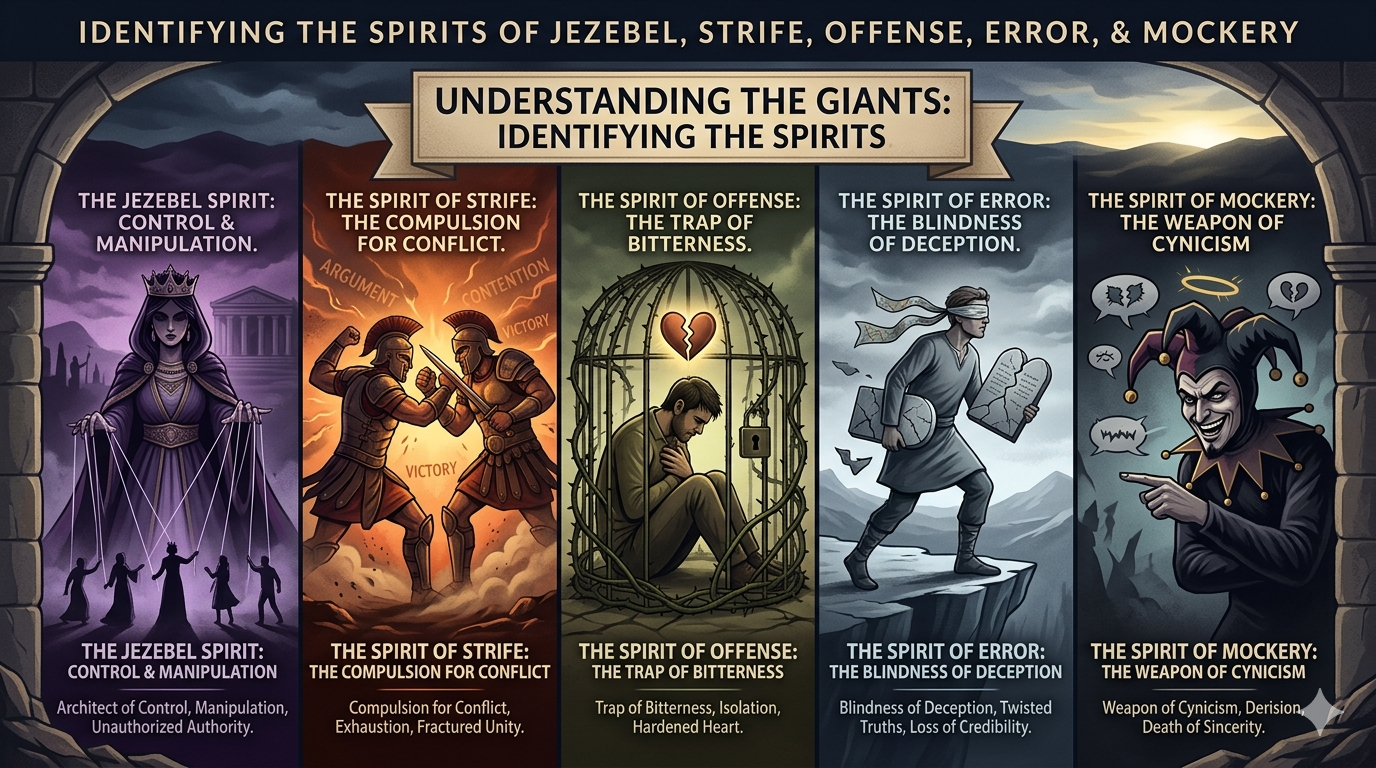
Identifying the Spirits of Jezebel, Strife, Offense, Error, and Mockery
The Bible reminds us that our primary struggles are not merely physical, but spiritual—a constant tug-of-war between light and darkness.
Ephesians 6:12 tells us that we wrestle not against flesh and blood, but against principalities and the spiritual forces of wickedness in high places. To walk in victory, we must first pull back the veil and identify the specific tactics used to disrupt our peace and stall our growth.
By understanding the nature of the “giants” we are up against, we are no longer blindsided by their influence. Instead, we are equipped with the spiritual discernment necessary to overcome them and stand firm in our faith.
In the journey of personal growth and spiritual maturity, we often encounter invisible barriers that disrupt our peace and stall our progress. Many traditions describe these as “spirits”—patterns of behavior and influence that can take root in communities, families, or even our own minds.Understanding these archetypes is the first step toward neutralizing their impact. Here is a deep dive into five of the most common influences that challenge our harmony today.
1. The Jezebel Spirit: The Architect of Control
The Jezebel archetype is often misunderstood as merely “seductive,” but its true core is unauthorized control. Derived from the biblical Queen Jezebel, this influence seeks to dominate through manipulation rather than overt force.
- The Tactic: It operates through “behind-the-scenes” maneuvering. It uses guilt, emotional withholding, or spiritual superiority to influence leaders and decision-makers.
- The Warning Sign: You may notice a pattern where a single individual quietly creates “factions” or demands exclusive access to authority figures, often playing the victim to gain sympathy and power.
- The Result: A slow erosion of healthy boundaries and the silencing of authentic voices.
Counter Control with Empowerment:
If you recognize a “Jezebel” influence, stop participating in “behind-the-scenes” gossip or factions. Set firm, clear boundaries and encourage transparency. Trust that God is your ultimate defender; you don’t need to manipulate situations to stay safe.
2. The Spirit of Strife: The Compulsion for Conflict
Strife is more than just a simple argument; it is a persistent atmosphere of friction. While a healthy debate seeks a solution, strife seeks a victory.
- The Tactic: It feeds on “the need to be right.” It turns minor differences of opinion into major character assassinations. It thrives in environments where people are more interested in winning an exchange than preserving a relationship.
- The Warning Sign: Constant “nit-picking” and a reflexive “yes, but…” response to every statement. In an atmosphere of strife, you feel like you are walking on eggshells, waiting for the next spark to ignite a fire.
- The Result: Exhaustion and the fracturing of unity.
Silence Strife with Humility:
When you feel the urge to “win” an argument at the cost of a relationship, choose to listen instead. Practice the “soft answer” that turns away wrath. Ask yourself: “Is being right more important than being reconciled?”
3. The Spirit of Offense: The Trap of Bitterness
Offense is often described as a “bait.” It is a spiritual trap that invites you to hold onto a grudge until it defines your identity.
- The Tactic: It heightens sensitivity. A person influenced by offense will “filter” every word spoken to them through a lens of suspicion, finding insults in compliments and betrayal in honest mistakes.
- The Warning Sign: A tendency to revisit past hurts constantly and a refusal to believe in the good intentions of others. It creates a “wall” that keeps people out, but also keeps the individual trapped in their own pain.
- The Result: Isolation and a hardened heart that can no longer receive love or correction.
Break Offense with Forgiveness:
Don’t let a hurt become a hobby. When someone stings you, consciously choose to release the debt before it takes root. Filter your thoughts through grace—assume the best of others’ intentions until proven otherwise.
4. The Spirit of Error: The Blindness of Deception
The Spirit of Error is the most subtle of the five because it masquerades as truth. It isn’t just about making a mistake; it is about a commitment to a lie.
- The Tactic: It works by “twisting” facts just enough to make them sound plausible. It often appeals to our ego, making us feel like we have “secret knowledge” or that everyone else is wrong.
- The Warning Sign: An unteachable spirit. When presented with clear evidence or sound logic, the person becomes defensive rather than curious. They are more committed to their narrative than to reality.
- The Result: A departure from sound judgment and a loss of credibility.
Correct Error with Teachability:
Stay grounded in the Word and remain open to correction. A heart that says, “I might be wrong, show me the truth,” is a heart that the Spirit of Error cannot inhabit. Seek wise counsel and stay accountable to a community of faith.
5. The Spirit of Mockery: The Weapon of Cynicism
Mockery is the “armor” of the insecure. It uses wit, sarcasm, and derision to belittle others and shield the self from vulnerability.
- The Tactic: It devalues anything that is sincere, holy, or meaningful. By mocking an idea or a person, the individual attempts to “lower” the target’s status so they don’t have to engage with them seriously.
- The Warning Sign: A “biting” sense of humor that always comes at someone else’s expense. It creates an environment where people are afraid to be genuine for fear of being ridiculed.
- The Result: The death of sincerity and the birth of a toxic, cynical culture.
Overcome Mockery with Honor:
Replace sarcasm and cynicism with genuine appreciation. Intentionally honor the people around you, especially when they are being vulnerable. Sincerity is the only cure for a toxic, mocking environment.
Moving Toward Clarity
Recognizing these traits isn’t about pointing fingers at others; it’s about evaluating the “atmosphere” we allow in our own lives.
By identifying the architecture of control, strife, offense, error, and mockery, we can choose to operate in their opposites: empowerment, peace, forgiveness, truth, and honor.
When we refuse to engage with these patterns, they lose their power. Peace isn’t just the absence of conflict—it’s the presence of a clarity that these influences cannot penetrate.
The Golden Rule for Spiritual Warfare:You cannot fight a spiritual battle with physical weapons. When you feel the atmosphere shifting toward conflict or control, stop and pray. Peace is not just the absence of noise; it is the presence of Christ.
“Submit yourselves therefore to God. Resist the devil, and he will flee from you.” — James 4:7
Your Next Steps Toward Freedom
Understanding the “Giants” is the first step, but walking in victory is a daily choice. If you feel overwhelmed by these influences today, remember that you don’t have to fight these battles in your own strength.
Practical Action Plan:
- Identify: Which of these five influences is most present in your life right now?
- Commit: Choose one “Counter-Action” (Empowerment, Humility, Forgiveness, Teachability, or Honor) to practice intentionally this week.
- Connect: Don’t isolate. Reach out to our community via the Family Forum or send us a Prayer Request below.
A Final Word of Encouragement:
No matter how big the ” Giant ” looks, the Bible promises that the One who is in you is greater than the one who is in the world. You are not defined by the battles you face, but by the victory already won for you.
Need to talk? Our team is here to support you. Scroll down to find our contact details or visit our Crisis Resources for immediate local support in Wakefield.