
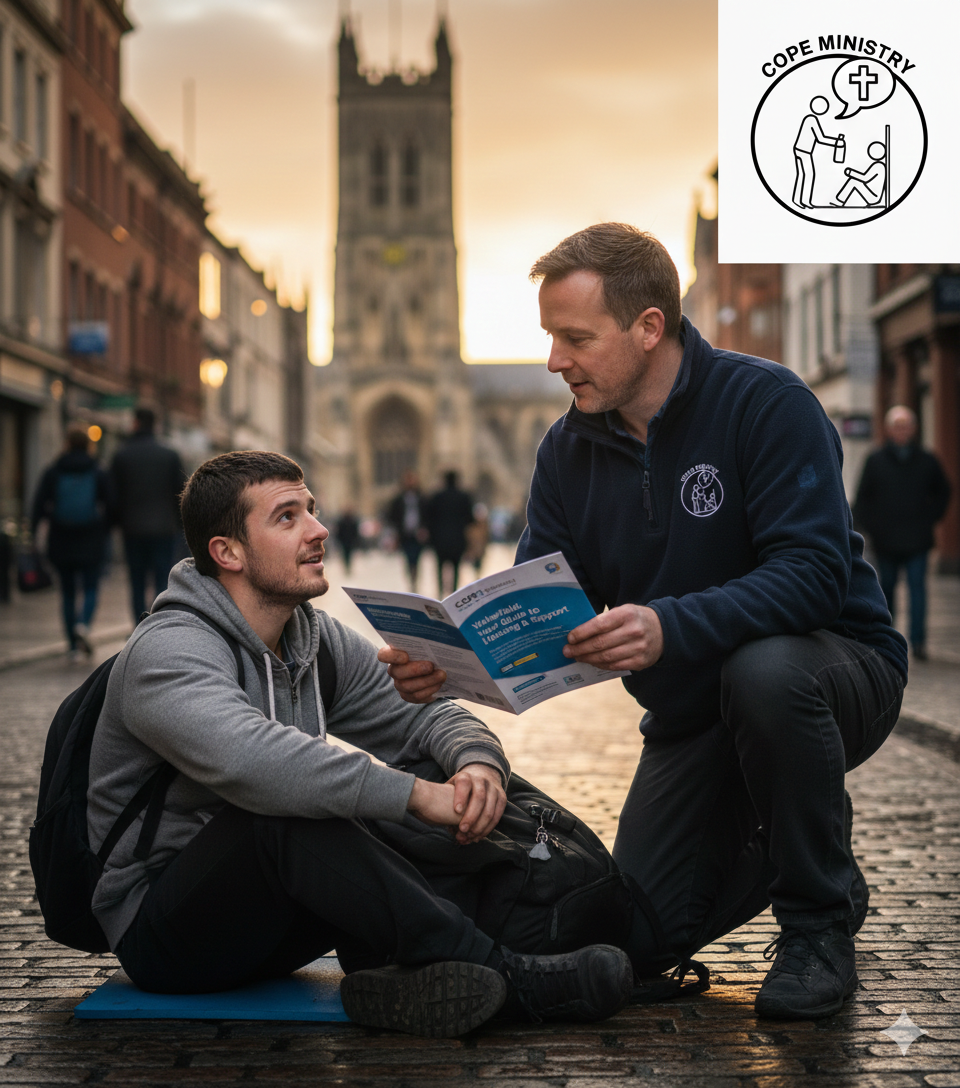
Crisis Resources: You Are Not Alone
If you are in immediate danger or have a medical emergency, please call 999 or go to your nearest A&E department immediately.
Immediate Mental Health Support
- Samaritans (24/7): For anyone needing a safe, non-judgmental space to talk.
- Call: 116 123 (Free from any phone)
- Website: samaritans.org
- SHOUT: A 24/7 text-based crisis support service.
- Text: “SHOUT” to 85258
- Website: giveusashout.org
- CALM (Campaign Against Living Miserably): Support specifically for men who are struggling.
- Call: 0800 58 58 58 (5pm – Midnight)
- Website: thecalmzone.net
Local Support (Wakefield & District)
- Turning Point (Wakefield Inspiration): Professional drug and alcohol recovery services across the Wakefield district.
- Call: 0300 123 1912
- Website: turning-point.co.uk
- Wakefield District City of Sanctuary: Dedicated support for homeless and vulnerable individuals in the city.
- Website: wakefield.cityofsanctuary.org
Food & Immediate Essentials
- CAP (Community Awareness Programme): Providing food, clothing, and essential help.
- Address: 2 Market St, Wakefield, WF1 1DH
- Call: 01924 381119
- Website: capwakefield.org.uk
- The Well Project (Normanton): Local food bank and community support hub.
- Call: 01924 895634
- Website: thewellproject.org.uk
- Wakefield Council Welfare Provision: Search Google for “Wakefield Council Welfare Provision” to apply for emergency food parcels and household support.
Housing & Benefits Support Wakefield
- Wakefield Council (Housing Needs): 01924 302085
- After Hours/Emergency: 0345 8 506506
- Housing Needs Service (Alternative): 01924 304362
- After Hours/Emergency Housing: 0345 8 506 506
- Marsh Way House (Homeless Support): 01924 385722
- Bridge-It Housing: 01924 907754
- Saviour’s Trust: 01977 600335
Homeless or worried about your tenancy?
For our full guide on Housing & Benefits in Wakefield
- Read our full guide on Homelessness Support, Housing & Benefits in Wakefield.
National Addiction & Recovery
- Frank: Honest, confidential information about drugs and addiction.
- Call: 0300 123 6600 | Text: 82111
- Website: talktofrank.com
- Alcoholics Anonymous (AA):
- Call: 0800 9177 650
- Website: alcoholics-anonymous.org.uk
- Narcotics Anonymous (NA):
- Call: 0300 999 1212
- Website: ukna.org
How Addiction Affects the Brain: Inside the Addicted Mind
At COPE Ministry, we believe that understanding the physical battle in the mind is a vital step toward healing. Addiction isn’t just a choice; it’s a powerful physiological struggle that changes how the brain works. This short video explains the science behind why breaking free is so difficult, and why we offer grace and support to everyone on their journey to recovery.
“Understanding the science of how addiction affects the brain can help us see why recovery is a journey that requires patience, grace, and support.”
Frequently Asked Questions about Addiction & Recovery
Q: If addiction is a “brain struggle,” does that mean I can’t stop?
A: Not at all. It means your brain has adapted to a substance, making it very hard to quit on willpower alone. Recovery is about “re-training” the brain and body. With the right medical support, community, and faith, the brain has an incredible ability to heal and adapt again.
Q: Where can I get face-to-face help?
A: There are professional recovery services and support groups like AA and NA that meet regularly in most areas. You can also reach out to local community awareness programmes for immediate essentials and a supportive environment.
Q: Is it dangerous to just stop “cold turkey”?
A: For some substances, like alcohol or benzodiazepines, stopping suddenly can be physically dangerous. We always recommend speaking to a GP or a professional recovery service to ensure you have a safe, managed plan for detoxing.
Q: How does faith help with the physical side of addiction?
A: While the science explains the “how,” faith often provides the “why.” A relationship with God can provide the inner peace, strength, and sense of purpose needed to stay the course during the difficult days of recovery. As we say at COPE: Nobody is too far gone.
Q: I’ve relapsed before. Is there any point in trying again?
A: Yes. Relapse is often a part of the journey, not the end of it. Each time you try, you learn more about your triggers. At COPE, our door and God’s grace are always open—no matter how many times you’ve had to start over.
Beyond the Physical: Identifying the Spiritual Barriers
While professional medical and community support are vital for your physical well-being, many find that there is also an invisible, spiritual side to the struggle. If you feel like you are fighting “invisible giants” like control, conflict, or bitterness that keep dragging you back down, we invite you to explore our guide on spiritual discernment.
Learn how to identify and overcome the influences of Jezebel, Strife, Offense, Error, and Mockery in your journey to freedom.
Read: Spiritual Battles – Understanding the Giants 👇
Finding Hope
The Cope Ministry Vision, we are working towards a better future.
Read about it Here