
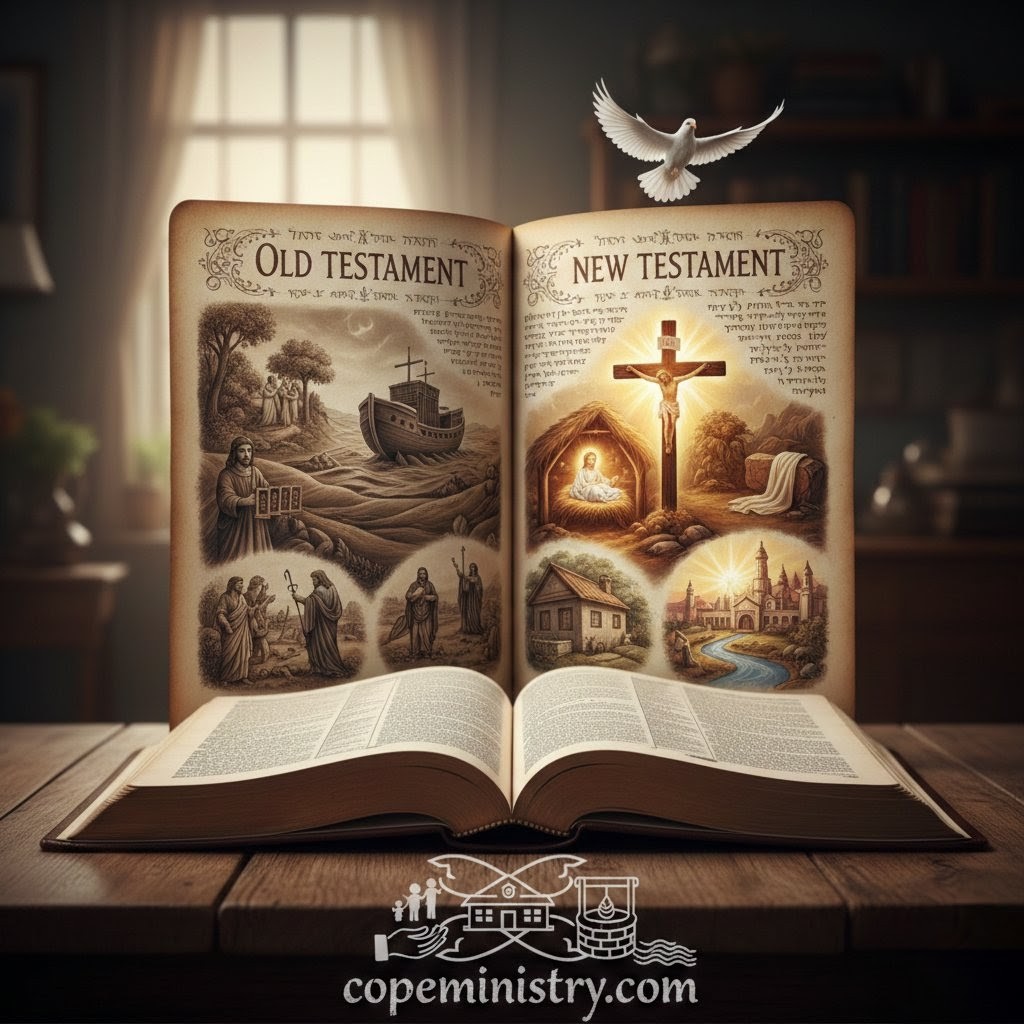
Understanding the Old and New Testaments
Have you ever opened a Bible and felt overwhelmed by its 66 different books, ancient history, and complex prophecies? Whether you are a lifelong believer or just curious about the world’s most influential book, understanding the structure of the Bible is the key to unlocking its message.
In this guide, we break down the Old and New Testaments, showing how the “Story of God” flows from the first page of Genesis to the final vision of Revelation.
The Old Testament: The Foundation of the Promise
The Old Testament consists of 39 books written over a millennium. It is more than just history; it is the “DNA” of the Christian faith.
1. The Pentateuch (The Law)
The first five books (Genesis through Deuteronomy) are the “Constitution” of Israel.
- Genesis: The origins of the universe and the promise to Abraham.
- Exodus: The miraculous rescue from slavery.
- Leviticus, Numbers, & Deuteronomy: The blueprint for holy living and the journey toward the Promised Land.
2. The Historical Books
From Joshua to Esther, these 12 books track the rise and fall of the nation of Israel, their kings (like David and Solomon), and their eventual exile and return.
3. Wisdom & Poetry
Books like Psalms, Proverbs, and Job provide the “heartbeat” of the Bible. They offer practical wisdom for daily life and a vocabulary for human suffering and worship.
4. The Prophets
The Prophets (Isaiah through Malachi) were God’s messengers. They called the people back to justice and mercy while pointing toward a future Messiah who would heal the world.
The New Testament: The Fulfillment of the Hope
The New Testament contains 27 books that record the arrival of that Messiah and the birth of His Church.
1. The Gospels & Acts
- Matthew, Mark, Luke, and John: The four eyewitness accounts of the life, death, and resurrection of Jesus.
- Acts: The “History” book that shows how the Gospel spread from a small upper room to the entire Roman world.
2. The Epistles (The Letters)
The majority of the New Testament consists of letters written by the Apostle Paul and other leaders like Peter and John.
- Theological Deep Dives: Romans and Hebrews explain why Jesus had to die.
- Practical Living: James and 1 Peter explain how to live out faith during hard times.
- Leadership Manuals: 1 & 2 Timothy and Titus provide the structure for church leadership.
3. Revelation (The Final Victory)
The Bible ends not with a “the end,” but with a “to be continued.” Revelation provides a vision of Christ’s final victory over evil and the restoration of a new heaven and a new earth.
Why This Matters Today: The COPE Ministry Connection
The Bible isn’t just a book to be studied; it is a book to be lived. This is exactly what we see at COPE Ministry (copeministry.com).
In the Old Testament, God expresses a deep heart for the “marginalized and the vulnerable.” In the New Testament, Jesus commands His followers to “go into all the world.” By supporting the Pokot people in Kenya, COPE Ministry fulfills both Testaments—providing education, clean water, and the Gospel message to those who need it most.
Conclusion: One Story, One Savior
The Bible is one unified story. The Old Testament is the Promise, and the New Testament is the Fulfillment. When you read it through this lens, the “Ancient Book” becomes a living map for your life today.