A Structural Outline of Scripture’s Books and Themes
Standard Christian
Biblical Canon And Theology.
66 Books Of The Bible.
📖 The Bible’s Grand Narrative: Creation, Fall, Redemption, and Restoration.
The entire Bible tells a single, unified story of God’s relationship with humanity and His plan to redeem the world through a promised Savior.
Thematic Groupings:
- Pentateuch
- History
- Poetry
- Prophets
- Gospels
- Letters
- Prophecy.
Old Testament: The Promise,
(Creation to the Preparation for the Messiah)
The Old Testament covers God’s initial acts of creation, establishing a relationship with humanity, and the tragic consequences of disobedience (The Fall). It focuses on God’s covenant with the nation of Israel, laying the legal, historical, and prophetic groundwork for the Savior’s arrival.
Creation and Fall (Genesis): God creates a perfect world and humanity in His image. Sin enters the world, leading to a broken relationship, death, and expulsion from Eden.
The Covenant People (Genesis-Deuteronomy): God chooses Abraham to establish a people (Israel) through whom the world will be blessed. This people is delivered from slavery in Egypt (Exodus) and given the Law at Sinai, establishing the terms of their holy life and relationship with God.
The Kingdom and the Prophets (Joshua-Malachi): Israel takes the promised land (Joshua) but repeatedly falls into sin, leading to the rise and fall of the Monarchy (Saul, David, Solomon). The Prophets arise to call the people back to the covenant, warning of judgment (Exile) but promising future restoration, a New Covenant, and the ultimate arrival of the Messiah.
📖 New Testament: The Fulfillment
(The Messiah to the Eternal Kingdom)
The New Testament reveals the fulfillment of the Old Testament’s promises in the person of Jesus Christ, and the establishment of the Church to spread His message.
The Life of Jesus (Gospels: Matthew, Mark, Luke, John): Jesus, the promised Messiah, is born, lives a sinless life, teaches the nature of God’s Kingdom, performs miracles, offers Himself as the ultimate sacrifice (Atonement) on the cross for the sins of the world, and rises physically from the dead (Resurrection).
The Church (Acts & Letters): The Holy Spirit is poured out, establishing the Church (Acts). The Apostles, especially Paul, spread the Gospel throughout the Roman world. The Letters (Epistles) provide theological instruction on the meaning of Jesus’ work, practical guidance for Christian living, and organization for the early Church.
The Final Victory (Revelation): A prophetic vision of the end times, confirming the final triumph of Jesus Christ over evil, the judgment of the world, and the eternal establishment of God’s perfect Kingdom (New Heavens and New Earth).
The Twelve Disciples
The Twelve Disciples (Apostles) were central to the transition from the Old to the New Covenant. They were personally trained by Jesus for three years to be the foundational leaders of the Church, bearing witness to His life, death, and resurrection. Their ministry, chronicled primarily in the Book of Acts, was instrumental in spreading the Gospel message from Jerusalem to the rest of the world.
Christian Biblical Canon:
Old/Testament 39 New/Testament 27
📖 Old Testament (39 Books) 📚
Pentateuch
Creation, the Fall, Flood, Abrahamic Covenant, Exodus from Egypt, and the giving of the Law at Sinai.
1-5 History and Law’s
Genesis
Exodus
Leviticus
Numbers
Deuteronomy
The conquest of Canaan, the cycle of disobedience (Judges), the rise and fall of the Monarchy (Saul, David, Solomon), division, exile, and the return to Jerusalem.
6-17 History
Joshua
Judges
Ruth
1 Samuel
2 Samuel
1 Kings
2 Kings
1 Chronicles
2 Chronicles
Ezra
Nehemiah
Esther
Explores life’s questions (Job, Ecclesiastes), provides instruction (Proverbs), and gives voice to Israel’s praise and prayer (Psalms).
18-22 Poetry
Job
Psalms
Proverbs
Ecclesiastes
Song of Solomon (or Song of Songs)
God’s final appeals to Israel and Judah, announcing impending judgment (exile) due to sin, but promising future restoration, a New Covenant, and the coming of the Messiah.
23-27 Major Prophets
Isaiah
Jeremiah
Lamentations
Ezekiel
Daniel
- The distinction between the Major Prophets and the Minor Prophets is based purely on the length of their biblical books.
- Not the importance of their messages!
The Major Prophets’ books are substantially longer, while the Minor Prophets’ books are shorter.
- All of them delivered God’s word and hold equal theological significance.
28-39 Minor Prophets
Hosea
Joel
Amos
Obadiah
Jonah
Micah
Nahum
Habakkuk
Zephaniah
Haggai
Zechariah
Malachi
📖 New Testament (27 Books) 📚
Gospels Life of Jesus
The four accounts of Jesus’ ministry, emphasizing his identity as the promised Messiah
(King, Servant, Man, God), His teaching, miracles, atoning death, and physical resurrection.
Matthew
Mark
Luke
John
Early Church
The birth of the Church at Pentecost, the spread of the Gospel message from Jerusalem to the Roman world, led by the Holy Spirit through the Apostles (Peter and Paul).
Acts
Paul’s Letters
Pauline and General Letters providing detailed theological instruction (e.g., justification by faith, the supremacy of Christ), ethical guidance for Christian living, and organization of the Church.
Romans
1 Corinthians
2 Corinthians
Galatians
Ephesians
Philippians
Colossians
1 Thessalonians
2 Thessalonians
1 Timothy
2 Timothy
Titus
Philemon
Letters
Hebrews
Other Letters
James
1 Peter
2 Peter
1 John
2 John
3 John
Jude
Prophecy
A prophetic vision of the end times, the final victory of Christ over evil, the judgment of the world, and the eternal establishment of God’s perfect kingdom (New Heavens and New Earth).
Revelation
Notes:
The Purpose of Jesus’ Miracles
The Twelve Disciples
Five Main Gifts
Pentateuch (5 Books: History and Law’s)
Genesis: Beginning/Origin. God creates the world; The Fall; Noah and the Flood; God’s covenant with the Patriarchs (Abraham, Isaac, Jacob, Joseph). Ends with Israel in Egypt.
📜 The Ten Plagues of Egypt
- Water Turned to Blood (Dam): The water of the Nile River, and all water sources in Egypt, turned to blood. The fish died, and the river stank.
- Frogs (Tzfardeya): An immense invasion of frogs covered the entire land of Egypt, entering houses, beds, and ovens.
- Lice or Gnats (Kinim): The dust of the earth turned into lice (or gnats/mosquitoes, depending on the translation), afflicting people and animals.
- Swarms of Flies or Wild Beasts (Arov): Swarms of flies infested the houses of the Egyptians, but not the region of Goshen, where the Israelites lived.
- Pestilence on Livestock (Dever): A severe disease killed the horses, donkeys, camels, cattle, sheep, and goats of the Egyptians.
- Boils (Sh’chin): Festering boils broke out on the skin of people and animals throughout Egypt.
- Hail and Fire (Barad): A devastating storm of thunder, hail, and fire (or lightning) destroyed crops, trees, and those caught in the open.
- Locusts (Arbeh): Swarms of locusts covered the land and devoured any remaining vegetation that the hail had not destroyed.
- Darkness (Choshech): A palpable darkness covered the land of Egypt for three days, but the Israelites had light in their dwellings.
- Death of the Firstborn (Makat Bechorot): The final and most severe plague, resulting in the death of every firstborn Egyptian male, both human and animal. This event finally led Pharaoh to release the Israelites.
Exodus: Redemption. Israel is enslaved; Moses is called; The Ten Plagues;
🙏 The Ten Commandments (Decalogue)
Duties to God
- I am the LORD your God; you shall have no other gods before me.
(Prohibits polytheism and elevating anything above God.)
- You shall not make for yourself a carved image, or any likeness… you shall not bow down to them or serve them.
(Prohibits idolatry.)
- You shall not misuse the name of the LORD your God.
(Prohibits swearing falsely, blasphemy, or treating God’s name lightly.)
- Remember the Sabbath day, to keep it holy.
(Establishes a day of rest and worship.)
Duties to Humanity
- Honor your father and your mother. (Establishes respect and duty toward one’s parents and elders.)
- You shall not murder.
(Prohibits the unlawful taking of human life.)
- You shall not commit adultery. (Prohibits sexual infidelity and emphasizes purity.)
- You shall not steal.
(Prohibits theft and kidnapping.)
- You shall not bear false witness against your neighbor.
(Prohibits lying, especially in a legal context, and mandates truthfulness.)
- You shall not covet your neighbor’s house… nor anything that belongs to your neighbor.
(Prohibits the desire for what belongs to others, addressing the underlying motive for sin.)
The Exodus from Egypt and the Red Sea crossing; The Covenant and Law (Ten Commandments) given at Mount Sinai; Construction of the Tabernacle.
Leviticus: Holiness. Laws for worship, priesthood, and moral/ritual purity. Details the sacrificial system (atonement) and the requirements for a holy people to live near a holy God.
Numbers: Disobedience & Discipline. Chronicles the 40 years of Israel’s wandering in the wilderness due to a lack of faith; Two censuses (counting) and the judging of the disobedient generation.
Deuteronomy: Second Law. Moses’ final three speeches restating and explaining the Law and the Covenant to the new generation before entering the Promised Land. Focuses on the choice between blessings (obedience) and curses (disobedience).
History (12 Books)
Joshua: Conquest. Joshua succeeds Moses; Israel conquers and divides the Promised Land (Canaan) among the twelve tribes.
Judges: Cycle of Apostasy. After Joshua’s death, Israel falls into a cycle of sin, oppression by enemies, crying out to God, and being delivered by various military and spiritual leaders (Judges).
Ruth: Redemption & Loyalty. A story of loyalty (Ruth) and God’s provision. A Moabite woman finds redemption and becomes an ancestor of King David (and thus, of Jesus).
1 Samuel: Transition to Monarchy (Saul). The ministry of Samuel (the last Judge); Israel demands a king; Saul is chosen and established as the first, but flawed, king of Israel.
2 Samuel: David’s Reign. Chronicles the reign of King David, detailing his rise, military successes, establishing Jerusalem, and the tragic consequences of his personal sins.
1 Kings: Division and Decline. Solomon’s glorious reign and subsequent apostasy; The kingdom divides into Israel (North) and Judah (South); Rise of Elijah the prophet.
2 Kings: Fall and Exile. The continued moral and political decline of both kingdoms; Stories of Elisha; The fall of Israel (North) to Assyria and the fall of Judah (South) to Babylon.
1 Chronicles: David’s Line (Priesthood focus). A parallel account to Samuel and Kings, focusing on the lineage of David and emphasizing the importance of the priesthood and temple worship.
2 Chronicles: History of Judah. Continues the narrative, focusing exclusively on the kings of Judah (David’s line) and ending with the exile to Babylon.
Ezra: First Return and Temple Rebuilding. The return of Jewish exiles from Babylon; Rebuilding the Temple in Jerusalem after the 70-year exile.
Nehemiah: Wall Rebuilding. Nehemiah leads the effort to rebuild the walls of Jerusalem and helps restore the people’s faith and commitment to the Law.
Esther: God’s Providence. A Jewish woman becomes Queen of Persia and saves her people from genocide (Holocaust) orchestrated by Haman. God’s name is not mentioned, but His providential hand is clear.
Poetry (5 Books)
Job: Theodicy/Suffering. Explores the question of why righteous people suffer through the story of Job, concluding with God’s sovereignty and wisdom.
Psalms: Worship & Prayer. A collection of 150 sacred songs, prayers, and poems covering a full range of human emotions and expressions toward God (praise, lament, thanksgiving, instruction).
Proverbs: Wisdom & Instruction. A collection of short, pithy sayings offering practical wisdom for daily life, emphasizing the fear of the Lord as the beginning of all knowledge.
Ecclesiastes: Meaning of Life. A philosophical exploration of the meaninglessness (“vanity”) of life lived apart from God, concluding that fearing God and keeping His commandments is the only true pursuit.
Song of Solomon (or Song of Songs): Love & Romance. A poetic celebration of the beauty, passion, and purity of marital love between a man and a woman, often interpreted allegorically as Christ’s love for the Church.
Major Prophets (5 Books)
Isaiah: Salvation is of the Lord. Prophecies
against Judah and the nations, but includes powerful visions of Israel’s restoration, the coming Messiah (Emmanuel), and future universal peace.
Jeremiah: Weeping Prophet. Prophesies of the coming destruction and exile of Judah (Babylonian invasion) due to their persistent sin. Also includes promises of a New Covenant.
Lamentations: Mourning Jerusalem. Five mournful poems (laments) grieving the destruction of Jerusalem by the Babylonians.
Ezekiel: Glory and Restoration. Prophecies given in Babylon about God’s judgment on Israel and the nations, emphasizing the ultimate restoration of Israel and the return of God’s glory to a rebuilt Temple.
Daniel: Sovereignty & End Times. Stories of Daniel and his friends in Babylonian captivity; Prophetic visions concerning the rise and fall of world empires and the ultimate triumph of God’s eternal kingdom.
Minor Prophets (12 Books)
Hosea: God’s Unfailing Love. Uses Hosea’s marriage to an unfaithful wife (Gomer) as a metaphor for God’s faithful, persistent love for an unfaithful Israel.
Joel: The Day of the Lord. Prophesies of a devastating locust plague and drought as a warning, urging the people to repentance before the final, great Day of the Lord.
Amos: Social Justice. Prophesies primarily against the Northern Kingdom (Israel), condemning their religious hypocrisy and their oppression of the poor.
Obadiah: Judgment on Edom. A brief prophecy announcing the coming judgment upon the nation of Edom for their pride and for aiding Israel’s enemies.
Jonah: God’s Compassion. The story of a reluctant prophet who attempts to flee God’s command to preach repentance to the enemy city of Nineveh, demonstrating God’s universal compassion.
Micah: True Worship. Denounces the corruption of Jerusalem and Samaria, calling for justice, kindness, and humility (“do justly, love mercy, walk humbly”); Prophesies the Messiah’s birth in Bethlehem.
Nahum: Judgment on Nineveh. A prophecy focused entirely on the coming destruction of Nineveh (capital of Assyria), confirming God’s vengeance against the oppressors of His people.
Habakkuk: Questioning God. A dialogue between the prophet and God, where Habakkuk questions why God allows evil to go unpunished and why He uses the wicked Babylonians as His instrument of judgment.
Zephaniah: Imminent Day of the Lord. Warns of the imminent, worldwide judgment (Day of the Lord), but promises a purified remnant will return.
Haggai: Rebuild the Temple. Written after the return from exile, urging the people to prioritize rebuilding the neglected Temple over their own homes.
Zechariah: Future Hope. Calls for repentance and offers sweeping prophecies about the Messiah’s coming, the future restoration of Israel, and the ultimate kingdom of God.
Malachi: Final Warnings. The last prophet of the Old Testament, calling for a renewal of covenant commitment, condemning the people’s casual attitude toward God, and predicting the coming of Elijah before the Day of the Lord.
📖 New Testament (27 Books)
Gospels (4 Books: Life of Jesus)
Miracles Performed by Jesus
- Turning Water into Wine: At the wedding in Cana (John 2:1-11).
- Healing the Royal Official’s Son: From a distance in Capernaum (John 4:46-54).
- Catch of Fish: Causing the apostles to net a huge number of fish (Luke 5:1-11).
- Casting out a Demon in the Synagogue: In Capernaum (Mark 1:21-28; Luke 4:33-37).
- Healing Peter’s Mother-in-Law: Of a fever (Matthew 8:14-15; Mark 1:29-31; Luke 4:38-39).
- Calming the Storm: Silencing the wind and waves on the Sea of Galilee (Matthew 8:23-27; Mark 4:35-41; Luke 8:22-25).
- Exorcism of the Gerasene Demoniacs: Casting many demons into a herd of pigs (Matthew 8:28-34; Mark 5:1-20; Luke 8:26-39).
- Healing the Paralytic at Capernaum: Lowered through the roof (Matthew 9:1-8; Mark 2:1-12; Luke 5:17-26).
- Healing the Woman with a Hemorrhage: Who touched his cloak (Matthew 9:20-22; Mark 5:25-34; Luke 8:43-48).
- Raising Jairus’s Daughter: From the dead (Matthew 9:18, 23-26; Mark 5:21-24, 35-43; Luke 8:40-42, 49-56).
- Healing Two Blind Men: In Galilee (Matthew 9:27-31).
- Exorcism of a Mute Man: Who was demon-possessed (Matthew 9:32-34).
- Healing the Man at the Pool of Bethesda: On the Sabbath (John 5:1-18).
- Feeding the Five Thousand: With five loaves and two fish (Matthew 14:13-21; Mark 6:30-44; Luke 9:10-17; John 6:5-15).
- Walking on Water: On the Sea of Galilee (Matthew 14:22-33; Mark 6:45-52; John 6:16-21).
- Healing the Canaanite Woman’s Daughter: From a distance (Matthew 15:21-28; Mark 7:24-30).
- Healing the Deaf and Mute Man of the Decapolis: By touching his tongue and ears (Mark 7:31-37).
- Feeding the Four Thousand: With seven loaves and a few small fish (Matthew 15:32-39; Mark 8:1-10).
- Healing the Blind Man of Bethsaida: Gradually, in two stages (Mark 8:22-26).
- Exorcism of the Boy with a Demon: Who suffered seizures (Matthew 17:14-21; Mark 9:14-29; Luke 9:37-43).
- The Temple Tax in the Fish’s Mouth: Directing Peter to find a coin (Matthew 17:24-27).
- Healing the Man Born Blind: Using mud and spittle (John 9:1-41).
- Healing the Woman who was Bent Over: On the Sabbath (Luke 13:10-17).
- Healing a Man with Dropsy: On the Sabbath (Luke 14:1-6).
- Cleansing Ten Lepers: Near the border of Samaria and Galilee (Luke 17:11-19).
- Raising Lazarus: From the dead in Bethany (John 11:1-44).
- Healing Blind Bartimaeus: Near Jericho (Matthew 20:29-34; Mark 10:46-52; Luke 18:35-43).
- Cursing the Fig Tree: Causing it to wither (Matthew 21:18-22; Mark 11:12-14, 20-25).
- Healing Malchus’s Ear: The high priest’s servant, after Peter cut it off (Luke 22:49-51).
Matthew: Jesus is the King. Written primarily to a Jewish audience, emphasizing Jesus as the promised Messiah and King who fulfills Old Testament prophecy.
📖 The Two New Testament Laws
Love Your Enemy
“You have heard that it was said, ‘Love your neighbor and hate your enemy.’
But I say to you, Love your enemies and pray for those who persecute you,”
— Matthew 5:43-44
The two key actions in this are:
Love your enemies
(an attitude and action).
Pray for those who persecute you
(a specific, active expression of that love).
Mark: Jesus is the Servant. A fast-paced, action-oriented Gospel that focuses on Jesus’ ministry, suffering, and miracles, emphasizing Him as the powerful Son of God and suffering Servant.
Luke: Jesus is the Son of Man. Written by a Gentile doctor, focusing on the historical reliability of the account, emphasizing Jesus’ humanity, compassion for the poor and marginalized, and His universal message.
John: Jesus is God. Written to establish the deity of Christ. Focuses on profound theological themes, using “I AM” statements and selected miracles (“signs”) to prove Jesus is the eternal Son of God.
History (1 Book: Early Church)
Acts: The Holy Spirit and the Church. Chronicles the establishment and expansion of the early Church from Jerusalem outward, beginning with Pentecost and following the ministries of Peter and Paul.
Miracles Performed by the Disciples/Apostles
Miracles by Peter (often with John)
The main takeaway when comparing the miracles of Jesus and the Apostles is the distinction in their authority:
- Jesus: Performed miracles in His own name and authority. His command was the source of the power.
- Apostles (Peter, Paul, etc.): Performed miracles “in the name of Jesus Christ.” They were the vessels or instruments through which the power of the resurrected Christ was channeled.
This difference confirms the New Testament’s teaching that Jesus is the divine source of power, while the Apostles were his chosen, Spirit-filled agents continuing His work.
- Healing the Lame Man at the Temple Gate: Peter told a man who was lame from birth to walk, in the name of Jesus Christ (Acts 3:1-10)
- Judgment on Ananias and Sapphira: Two believers were struck dead after lying about money they donated to the church (Acts 5:1-11). This demonstrated God’s judgment and power through Peter.
- Widespread Healing by Shadow: People were brought into the streets and healed by the mere passing of Peter’s shadow (Acts 5:12-16).
- Angel Frees Apostles from Prison: An angel opened the prison doors and led the Apostles out (Acts 5:17-21).
- Healing Aeneas: Peter healed a paralytic man named Aeneas in Lydda, who had been bedridden for eight years (Acts 9:32-35).
- Raising Tabitha (Dorcas) from the Dead: Peter restored a faithful female disciple to life in Joppa (Acts 9:36-41).
- Peter Freed from Prison by an Angel: An angel led Peter past guards and through an iron gate, freeing him from jail (Acts 12:7-17).
Miracles by Philip and Stephen (Deacons/Evangelists)
- Signs and Wonders in Samaria: Philip performed many signs, including casting out demons and healing the lame (Acts 8:6-7).
- Great Wonders by Stephen: Stephen, a deacon, performed great wonders and signs among the people (Acts 6:8).
- Philip Transported: The Holy Spirit miraculously carried Philip from the desert (after baptizing the Ethiopian eunuch) to Azotus (Acts 8:39-40).
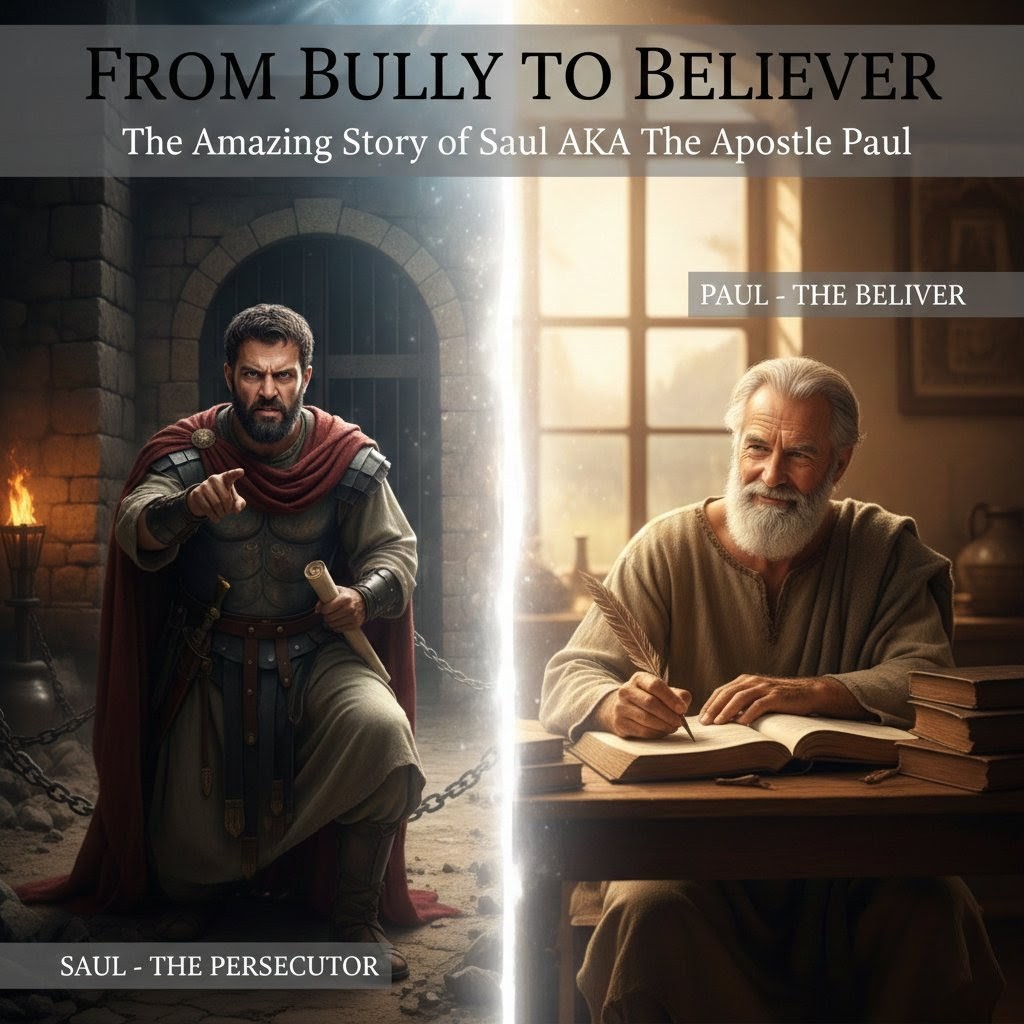
Miracles by Paul (formerly Saul)
- Blinding Elymas the Sorcerer: Paul struck a sorcerer named Elymas with temporary blindness for trying to stop a local official from hearing the Gospel (Acts 13:6-12).
- Healing a Crippled Man at Lystra: Paul commanded a man, lame from birth, to stand and walk (Acts 14:8-10).
- Casting out a Spirit of Divination: Paul exorcised a demon from a slave girl in Philippi (Acts 16:16-18).
- Jailbreak by Earthquake: An earthquake shook the Philippian prison, opening all the doors and unfastening the chains of Paul and Silas (Acts 16:25-26).
- Unusual Miracles by Cloths: People were healed and demons were cast out through handkerchiefs or aprons that had touched Paul (Acts 19:11-12).
- Raising Eutychus from the Dead: Paul restored Eutychus, a young man who fell to his death from a third-story window during a long sermon (Acts 20:9-12).
- Surviving a Viper Bite: Paul was unharmed after being bitten by a poisonous viper on the island of Malta (Acts 28:3-6).
- Healing on Malta: Paul healed Publius’s father of fever and dysentery, which led to all the sick people on the island being healed (Acts 28:7-9).
Paul’s Letters (13 Books: Pauline Epistles)
Romans: The Gospel. Paul’s most systematic explanation of the Gospel, covering topics like human sinfulness, justification by faith alone, sanctification, and God’s plan for Israel.
The righteousness of God, sin, justification, and salvation through faith in Christ alone.
1 Corinthians: Correction & Order. Written to a problematic church, addressing divisions, moral issues (sexual immorality), spiritual gifts, and the resurrection of Christ.
Addressing divisions, immorality, worship, spiritual gifts, and the resurrection.
2 Corinthians: Paul’s Apostleship. Paul defends his authority and ministry from critics, emphasizing the power of God in weakness and suffering.
Defending his apostleship, contrasting the Old and New Covenants.
Galatians: Justification by Faith. A fierce defense of the doctrine of salvation by grace through faith alone, warning against mixing Law and works with the Gospel (“Judaizers”).
Vigorously defending salvation by grace through faith, separate from the Mosaic Law.
Ephesians: The Church in Christ. Focuses on the unity of believers (Jew and Gentile) in Christ and provides instruction on Christian living, spiritual warfare, and family roles.
The Church as the Body of Christ, God’s plan to unite all things in Him, and spiritual warfare.
Philippians: Joy in Suffering. An encouraging letter written from prison, emphasizing joy, humility (the Kenosis passage), and steadfastness regardless of circumstance.
Joy in suffering, the humility of Christ (Christ Hymn), and perseverance.
Colossians: Christ’s Supremacy. Affirms the absolute deity and supremacy of Christ as the head of the church and the creator of all things, warning against false philosophies.
Christ Jesus is the head of all creation and the Church; warnings against false philosophy.
1 Thessalonians: Christ’s Return. Written to encourage believers facing persecution, emphasizing holy living and giving clear instruction regarding the Second Coming of Christ.
2 Thessalonians: Clarifying the Return. Clarifies misunderstandings about the timing of the Lord’s return and encourages believers to continue working faithfully while awaiting His coming.
Comfort, ethical living, and instruction concerning the ‘Day of the Lord’ (Eschatology).
1 Timothy: Church Leadership. Practical instructions for Timothy on organizing and leading the church, including qualifications for elders and deacons.
2 Timothy: Endurance & Perseverance. Paul’s final letter, urging Timothy to remain faithful to the Gospel, endure hardship, and pass the truth on to others.
Titus: Order on Crete. Instructions to Titus on appointing qualified leaders and promoting sound doctrine and practical righteousness in the churches on Crete.
Guidance for church leadership, worship, teaching, and Christian conduct.
Philemon: Forgiveness & Reconciliation. A short, personal letter urging Philemon to forgive and accept his runaway slave, Onesimus, back as a brother in Christ.
A personal letter urging Philemon to reconcile with his runaway slave, Onesimus.
Letters (9 Books: General Epistles)
Hebrews: Christ is Superior. Written to Jewish Christians, demonstrating the superiority of Jesus Christ over the Old Covenant system (priesthood, sacrifices, angels, Moses, etc.) and urging them not to abandon the faith.
The Superiority of Christ over the Old Covenant (Law, Priesthood, Sacrifices).
James: Faith in Action. Emphasizes that genuine saving faith must be demonstrated by good works, offering practical wisdom on controlling the tongue and handling wealth.
Faith and Works; practical Christian living, proving faith through action.
1 Peter: Suffering & Hope. Encourages believers facing persecution to stand firm, live holy lives, and trust in the coming salvation and glory of Christ.
Suffering and Holy Living; encouraging believers to stand firm amidst persecution.
2 Peter: Warnings against False Teachers. Warns the church about the dangers of false teachers and moral license that threaten the church, confirming the certainty of Christ’s return.
Warnings against false teachers and the certainty of Christ’s return.
1 John: Fellowship with God. Gives tests of true salvation (obedience, love for one another, and belief in Jesus’ deity) and offers assurance of salvation.
Assurance of Salvation; the command to love one another, and tests of genuine faith.
2 John: Warning against False Teaching (Personal). A brief warning against supporting traveling teachers who deny the true doctrine of Christ.
A brief warning against supporting false teachers (Hospitality and Doctrine).
3 John: Hospitality. Praises Gaius for his hospitality to traveling missionaries and condemns Diotrephes for his self-serving refusal to cooperate.
Commendation of faithful service (Gaius) and rebuke of uncooperative leadership (Diotrephes).
Jude: Contending for the Faith. A short, urgent call for believers to contend earnestly for the truth of the Gospel against dangerous apostates who had infiltrated the church.
(Jude Jesus Half Brother)
A call to Contend for the Faith against false teaching and moral defection.
Prophecy (1 Book)
Revelation: Christ’s Triumph. A prophetic vision given to John about the end times, the cosmic conflict between God and Satan, the final judgment, the glorious return of Christ, and the establishment of the New Heavens and New Earth.
The Purpose of Jesus’ Miracles
The miracles of Jesus were essential elements of the New Testament narrative, acting as proof, declaration, and demonstration of His identity and the arrival of God’s Kingdom.
1. Proof of Messianic Identity (Fulfillment)
The miracles served as irrefutable evidence that Jesus was the promised Messiah (Christ) foretold in the Old Testament. Prophets like Isaiah spoke of the signs the Messiah would perform:
- Healing the Sick: Isaiah prophesied, “Then the eyes of the blind shall be opened, and the ears of the deaf unstopped. Then shall the lame man leap like a deer, and the tongue of the mute sing for joy” (Isaiah 35:5-6).
- Controlling Nature: The miracles showed power over creation, a power that only God (and thus His unique Son) possessed.
2. Declaration of the Kingdom (Authority)
The miracles were visible proof that God’s Kingdom had arrived in the person of Jesus and that Satan’s power was being broken.
- Exorcisms: Driving out demons demonstrated ultimate authority over spiritual forces of evil.
- Healing the Paralytic: Jesus first forgave the man’s sins before healing him (Mark 2:1-12), showing His authority was not just physical, but spiritual and divine.
3. Demonstration of Redemption (Compassion)
The miracles were acts of compassion that demonstrated the nature of redemption and the ultimate state of the New Creation.
- Restoring the Broken: The healings gave a glimpse of the future where all sickness, deformity, and death will be permanently reversed in the New Heavens and New Earth (as described in the book of Revelation).
- Feeding the Multitudes: This act foreshadowed Jesus as the ultimate “Bread of Life” who sustains and satisfies humanity’s deepest spiritual needs (John 6).
The Twelve Disciples
(also known as the Twelve Apostles)
The primary followers chosen by Jesus Christ.
Their names, as listed in the Bible:
Matthew 10:2-4
Mark 3:16-19
Luke 6:14-16
- Simon (Peter)
- Andrew (Peter’s brother)
- James (son of Zebedee)
- John (James’ brother)
- Philip
- Bartholomew (sometimes identified with Nathanael)
- Thomas
- Matthew (the tax collector)
- James (son of Alphaeus)
- Thaddaeus (also known as Judas, son of James)
- Simon the Zealot
- Judas Iscariot (the one who betrayed Jesus)
After Judas Iscariot betrayed Jesus and died,
Matthias was chosen to take his place among the twelve, as recorded in the book of Acts 1:26
Disciple Key Role & Characteristics Post-Biblical Tradition (Missionary Work)
👨👩👦👦 The Twelve Disciples
The Twelve Disciples (Apostles) were central to the transition from the Old to the New Covenant. They were personally trained by Jesus for three years to be the foundational leaders of the Church, bearing witness to His life, death, and resurrection. Their ministry, chronicled primarily in the Book of Acts, was instrumental in spreading the Gospel message from Jerusalem to the rest of the world.
- John
The “Beloved Disciple” 💙
Brother of James. Also part of the inner circle (along with Peter and James, son of Zebedee). Known for his compassion and loyalty. He is traditionally the author of the Gospel of John, three epistles, and the Book of Revelation.
Ministry: A key leader in the early Jerusalem Church alongside Peter. Later, he moved to Ephesus (Asia Minor) and oversaw the churches in that region. He was exiled by Emperor Domitian to the island of Patmos, where he received the visions recorded in the Book of Revelation.
Death: The only one of the original twelve apostles traditionally believed to have died a natural death of old age. He was released from exile and returned to Ephesus, dying peacefully around A.D. 100, thus closing the Apostolic Age.
- Simon (Peter)
The Leader & “Rock” 🪨
Considered the leading figure and spokesperson. Jesus gave him the nickname Cephas (Aramaic for “Rock”). He was impulsive, bold, and became the central preacher at Pentecost and the apostle to the Jews.
Ministry: Worked in Jerusalem, Judea, and Antioch before settling in Rome. Wrote two New Testament epistles (1 & 2 Peter).
Death: Martyred in Rome around 64 AD during Emperor Nero’s persecution. Crucified upside down at his own request, feeling unworthy to die in the same manner as Jesus.
- Andrew
The Connector 🔗
Peter’s brother and one of the first disciples called. Known for humbly bringing others to Jesus, including Peter (John 1:40-42) and the boy with the loaves and fish.
Ministry: Tradition places his missionary work in Scythia (modern-day Ukraine/Russia) and Greece. He is the patron saint of Scotland and Russia.
Death: Martyred by crucifixion in Patras, Achaea (Greece). He is said to have been bound to an X-shaped cross (a crux decussata), which is now known as the Saint Andrew’s Cross.
- James (Son of Zebedee)
The “Son of Thunder” ⚡
Brother of John. Part of Jesus’ inner circle (along with Peter and John). He was zealous and the first apostle to be martyred for his faith (Acts 12:2).
Ministry: Legend connects his preaching to Spain before returning to Jerusalem.
Death: The first apostle to be martyred. Killed by the sword on the orders of King Herod Agrippa I in Jerusalem around 44 AD (Acts 12:2).
- Philip
The Practical Inquisitor 🤔
Known for asking practical questions (e.g., about feeding the 5,000) and for introducing Nathanael (Bartholomew) to Jesus.
Ministry: Tradition generally places his work in Asia Minor, particularly in the region of Phrygia.
Death: Martyred by crucifixion and possibly stoned in Hierapolis, Phrygia (modern-day Turkey).
- Bartholomew
The Honest One 💯
Often identified with Nathanael. Jesus described him as “a true Israelite in whom there is nothing false.”
Ministry: Apostolic work is traditionally assigned to regions as far-reaching as India, Mesopotamia, Persia, and Armenia.
Death: Traditionally said to have been flayed alive (skinned) and then beheaded in Armenia for preaching the Gospel.
- Matthew (Levi)
The Scribe ✍️
A former tax collector (a despised profession). His calling demonstrated Jesus’ outreach to outsiders. He is traditionally the author of the Gospel of Matthew, which emphasized Jesus as the fulfillment of Old Testament prophecy.
Ministry: Tradition assigns his work primarily to Ethiopia and possibly Persia or Syria.
Death: While some accounts suggest a natural death, the most widespread tradition is that he was martyred by a sword or spear in Ethiopia.
- Thomas
The Doubter ❓
Courageous. Famous for demanding physical proof of the resurrected Christ (“Doubting Thomas”), but his subsequent declaration, “My Lord and my God!” (John 20:28), is one of the clearest statements of faith.
Ministry: Credited with the earliest missionary work in India, where the Malabar Christians (“Saint Thomas Christians”) trace their origins to him.
Death: Martyred by a spear while praying on a hill near Chennai (Madras), India.
- James (Son of Alphaeus)
The Less Prominent 🕊️
Often called “James the Less” to distinguish him from the son of Zebedee. Little is known about his specific ministry in the Gospels.
Ministry: He may have ministered in Jerusalem or the surrounding area, but clear tradition is lacking.
Death: Tradition often says he was crucified in Ostracine, Egypt. Other traditions say he was beaten to death or thrown from the temple.
- Thaddaeus (Jude)
The Questioner 🙋
Known for a question he asked at the Last Supper (John 14:22). He is often conflated with Jude, the author of the short New Testament epistle.
Ministry: Tradition places his work alongside Simon the Zealot in the regions of Persia and Mesopotamia.
Death: Martyred, often by being clubbed or axed to death, alongside Simon the Zealot in Persia.
- Simon the Zealot
The Revolutionary 🚩
His surname, “Zealot,” suggests he may have belonged to a Jewish faction dedicated to violently overthrowing Roman rule before following Jesus.
Ministry: Tradition states he traveled widely, possibly to the Middle East, North Africa, and the British Isles, before linking up with Thaddaeus in Persia.
Death: Martyred alongside Thaddaeus in Persia, often depicted as being sawn in half or suffering crucifixion.
- Judas Iscariot
The Betrayer 💸
His specific role was the treasurer for the group (John 12:6), but his ultimate role was to betray Jesus to the religious authorities. He did not become an Apostle.
Ministry: None. He did not continue in the role.
Death: After betraying Jesus, he was overcome with guilt and hanged himself (Matthew 27:5).
The five gifts are:
The “five main gifts in the church” refers to the Fivefold Ministry Gifts listed in the New Testament book of Ephesians.
These gifts are given by Christ to people within the church to equip the saints for the work of ministry and for building up the body of Christ (Ephesians 4:11-12).
- Apostle: Often seen as pioneer leaders who establish and oversee new churches or ministries, setting foundations and spiritual order.
- Prophet: Individuals who speak God’s truth to the people, providing guidance, correction, encouragement, and helping the church stay aligned with God’s will.
- Evangelist: Those specially gifted to proclaim the Gospel and lead others to faith in Jesus Christ, focusing on outreach.
- Pastor (or Shepherd): Those who care for, protect, guide, and nurture individual believers and the local church community.
- Teacher: Individuals gifted with the ability to communicate and explain God’s truth effectively, leading others to deeper understanding and application of the Bible.