
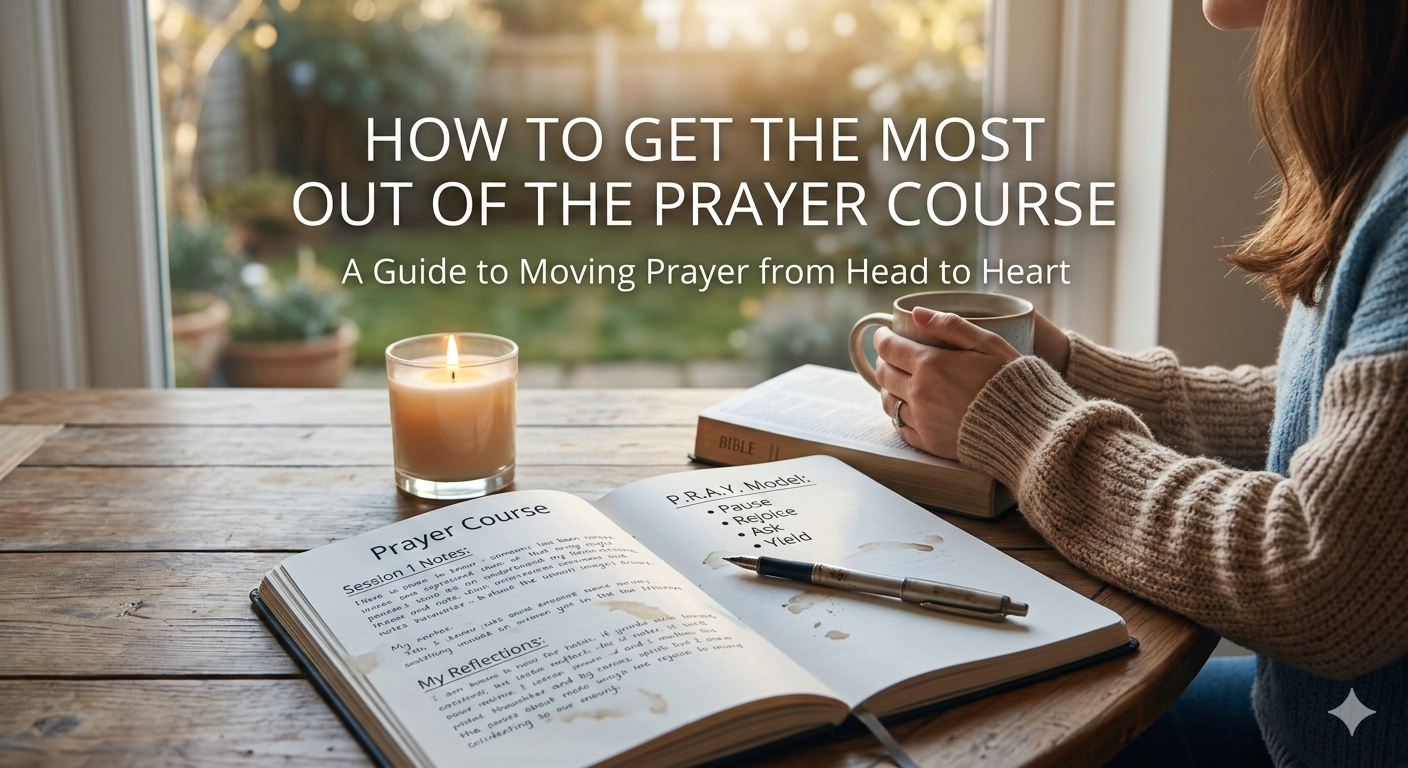
How to Get the Most Out of The Prayer Course
To truly benefit from The Prayer Course, it is best to treat it as an experiential workshop rather than a traditional academic study. Because the course is designed to move from the “head” to the “heart,” the following approach will help you absorb the material effectively.
You can access all the session videos and resources at PrayerCourse.org/sessions.
1. The “Watch-Reflect-Do” Rhythm
The course is most effective when you break each session into three distinct phases:
- Watch: View the video without multi-tasking. Pete Greig often uses storytelling and historical context that require focused attention to catch the nuances.
- Reflect: Immediately after the video, use the Guest Manual to answer the reflection questions. Don’t rush this—write down where you felt challenged or inspired.
- Do: Each session ends with a “Prayer Tool” (e.g., Lectio Divina, Intercession, or Silence). This is the most important part. You will learn more about prayer by doing it for ten minutes than by reading about it for an hour.
2. Use the Guest Manual as a Lab Notebook
Instead of just filling in the blanks, treat your manual as a spiritual journal for the duration of the course.
- Track Patterns: Note which types of prayer feel natural to you and which feel difficult.
- Record “Unanswered” Thoughts: The session on unanswered prayer is often the most impactful; use the manual to honestly document your own “Why?” questions.
3. The Power of the “Small Start”
A common mistake is trying to pray for an hour a day immediately after Session 1. To avoid burnout and ensure long-term absorption:
- The 10-Minute Rule: Commit to practicing the specific “Prayer Tool” of the week for just 10 minutes a day.
- Consistency over Intensity: It is better to pray the Lord’s Prayer slowly for five minutes every day than to do a deep dive once a week and forget it in between.
4. Engage in “Active Processing”
If you are doing this solo, find a “processing partner” or a journal to talk through the concepts. If you are in a group, prioritize the discussion time. The course is designed to be communal; hearing how others struggle with or experience God helps demystify prayer and makes it feel more attainable.
5. Supplemental Integration
To deepen the experience, you might consider:
- The P.R.A.Y. Model: The course centers on the acronym Pause, Rejoice, Ask, and Yield. Try to structure your morning or evening using this framework even outside of the course sessions to build the habit.
- Read the Source Material: If a particular session resonates deeply, Pete Greig’s book How to Pray serves as the expanded text for this course and provides more historical and theological depth.
Your Recommended Weekly Flow
- Day 1: Watch the session video and complete the initial manual reflections.
- Days 2–6: Practice the specific Prayer Tool assigned for that week.
- Day 7: Review the “Going Deeper” section in the manual and prepare for the next session.
Perspective: By focusing on the practice as much as the content, the course will shift from being a set of ideas to a lived rhythm of communication.
Leave a Reply