
Clearing the Confusion
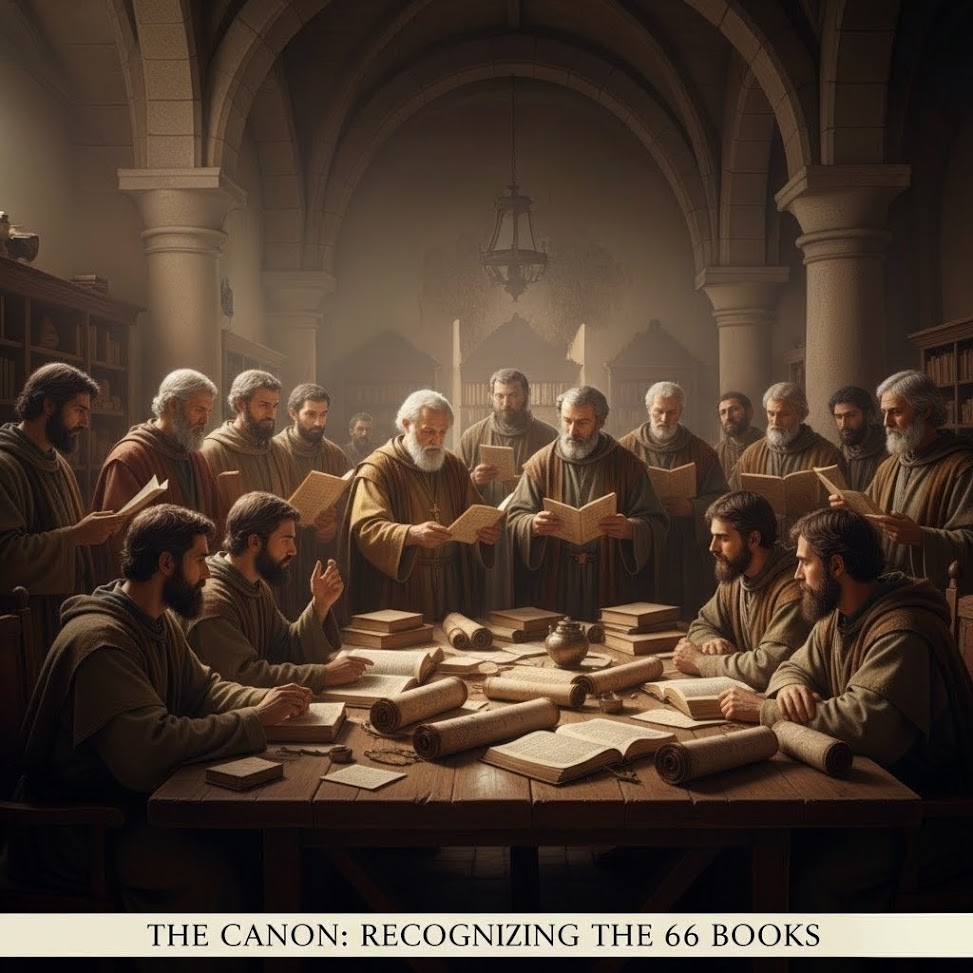
There is a common misconception in modern culture that the Council of Nicaea (325 AD) was the moment a group of men sat in a room, looked at a pile of books, and voted on which ones would make it into the Bible.
While Nicaea was a pivotal moment for the Church, the story of how we got our 66-book Canon is much more organic—and much more interesting.
What Actually Happened at Nicaea?
The Council of Nicaea was called by Emperor Constantine primarily to address the Arian Controversy (a debate over the divinity of Jesus) and to standardize the date of Easter.
If you look at the historical records and the “Canons” (rules) produced at Nicaea, you’ll notice something surprising: The Bible’s table of contents wasn’t even on the official agenda.
While the bishops certainly quoted Scripture as their authority, they weren’t there to “create” the Bible. They were there to clarify what the Church already believed about the nature of God.
How the 66 Books Were Recognized
The “Canon” (meaning “measuring rod” or “standard”) wasn’t chosen by a single committee. Instead, it was a process of recognition over several centuries. The Church looked for three specific criteria:
- Apostolic Origin: Was it written by an apostle or someone closely connected to them (like Luke or Mark)?
- Orthodoxy: Did the teaching align with the “rule of faith” and the rest of Scripture?
- Ecclesial Usage: Was the book being used and recognized as inspired by the vast majority of local churches?
By the late 2nd century—over 100 years before Nicaea—the four Gospels, Acts, and Paul’s letters were already universally accepted as Scripture. The “fringes” of the New Testament (books like Revelation or 2 Peter) were finalized at later councils, such as the Council of Carthage (397 AD), but even then, these councils were simply formalizing what the global Church had already been practicing for generations.
The 66 Books: Why These and Not Others?
Many people ask about “lost books” or the “Gnostic gospels” (like the Gospel of Thomas). History shows these weren’t “lost”—they were rejected by the early Church because they were written much later (often 100–200 years after Jesus) and contradicted the eyewitness accounts of the Apostles.
- The Old Testament (39 Books): These were the books recognized by Jesus and the Jewish people of His day as the “Law, Prophets, and Writings.”
- The New Testament (27 Books): These represent the authentic, first-century testimony of those who saw the risen Christ and founded the Church.
Why It Matters Today
Knowing that the Canon wasn’t “invented” at Nicaea gives us confidence in the reliability of the Bible. It wasn’t a political move or a late-night edit; it was the result of the Holy Spirit guiding the early Church to preserve the truth.
As we often discuss at COPE Ministry, understanding the history of the Word helps us stand firmer in the power of the Word.