
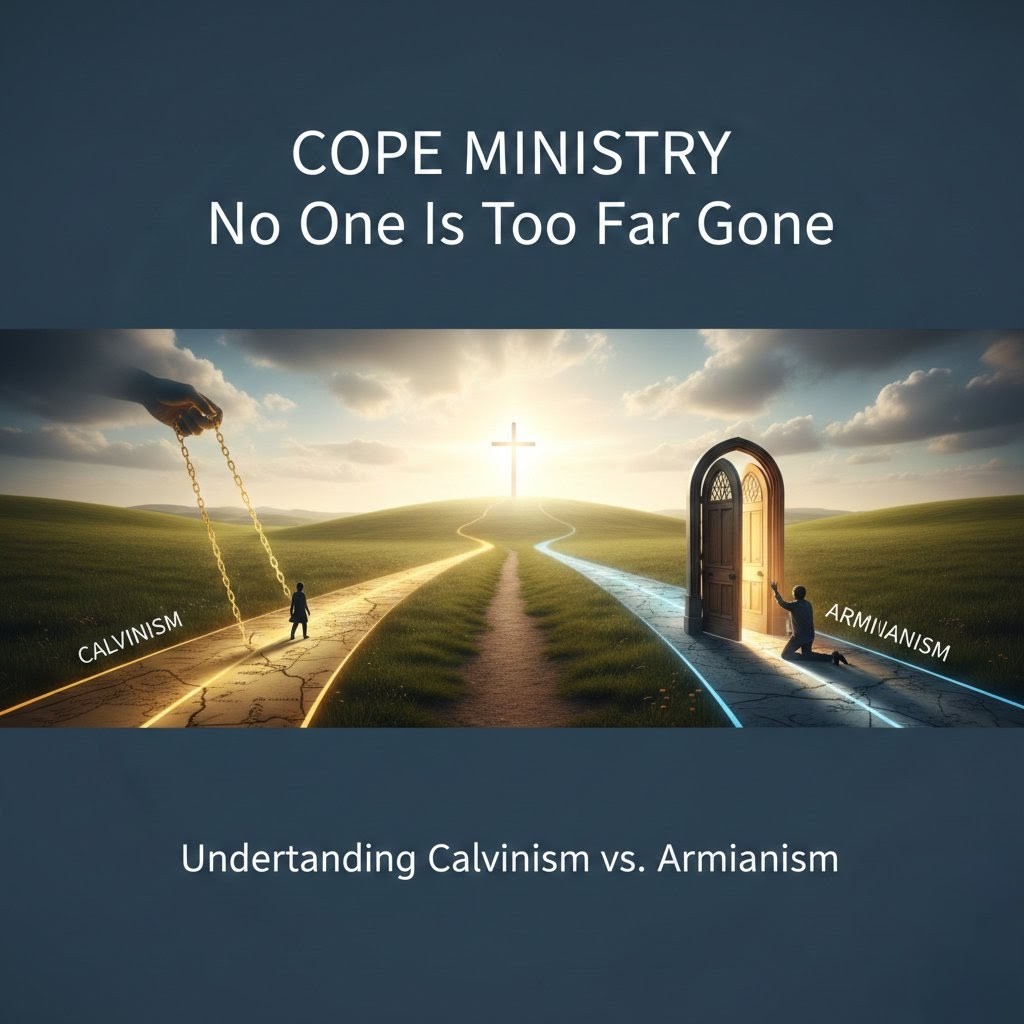
Is Anyone Truly Too Far Gone? Calvinism, Arminianism, and the Reach of God
At COPE Ministry, we live by a simple truth: “No one is too far gone. Anyone can be saved.” But when we dive into the Bible, we find a centuries-old conversation about how that salvation actually works.
If you’ve ever felt like your past is too dark or your heart is too hard for God to reach, understanding these two perspectives—Calvinism and Arminianism—can offer you incredible hope. Let’s break down these two “maps” of grace.
Understanding Calvinism: The Sovereignty of Grace
Calvinism, named after John Calvin, focuses on the absolute power and sovereignty of God. It suggests that if salvation depended on us, we’d be in trouble! Instead, it teaches that God is the one who initiates, sustains, and completes our rescue.
The core of Calvinism is often explained through the TULIP acronym:
- Total Depravity: Sin has affected every part of us—our minds, hearts, and wills. Without God’s help, we are spiritually “dead” and cannot choose Him on our own.
- Unconditional Election: God chooses to save us based on His own mercy and love, not because of anything good we have done or any “potential” He sees in us.
- Limited Atonement: This view suggests that Jesus’ sacrifice on the cross was a specific, guaranteed payment for the sins of His people.
- Irresistible Grace: When the Holy Spirit calls a person, His love is so beautiful and powerful that the person eventually, and freely, says “Yes” to God.
- Perseverance of the Saints: Because salvation is God’s work, He won’t let you go. You are secure in His hands forever.
Understanding Arminianism: The Invitation of Grace
Arminianism, named after Jacobus Arminius, focuses on God’s desire for a genuine, two-way relationship with every human being. It emphasizes that God has opened the door for everyone, but He gives us the dignity of choosing to walk through it.
The Arminian perspective is often viewed through these key points:
- Prevenient Grace: While we are sinful, God gives everyone a “leading grace” that empowers our free will, allowing us to respond to the Gospel.
- Conditional Election: God chooses those who choose Him. He foresees who will put their faith in Jesus and welcomes them into His family.
- Unlimited Atonement: Jesus died for every single person who has ever lived. His gift is available to all, though it is only received by those who believe.
- Resistible Grace: God is a gentleman; He offers His love and salvation to everyone, but He does not force His grace upon those who are determined to reject it.
- Assurance of Salvation: While we can have peace in our relationship with God, there is an emphasis on “abiding in the vine” and remaining faithful to the end.
The Big Comparison: How Do They Differ?
Who takes the first step?
In Calvinism, God takes the first step by bringing a spiritually dead heart back to life so they can believe. In Arminianism, God takes the first step by giving everyone enough grace to choose whether to believe.
Is salvation a guarantee?
Calvinists believe that if you are truly saved, you can never be lost because God is the one holding onto you. Arminians emphasize that we must continue to walk with God and stay connected to Christ to remain in that salvation.
Who can be saved?
Both views agree: Anyone! * Calvinism says anyone can be saved because God’s power is greater than any sin.
- Arminianism says anyone can be saved because God has made the offer available to every person on earth.
Why This Matters for the “Too Far Gone”
At COPE Ministry Wakefield, we don’t get hung up on the labels. We get excited about the Result.
If you feel “too far gone” today, remember this:
- If the Calvinists are right, your “dead heart” is exactly what God specializes in bringing back to life.
- If the Arminians are right, God is standing at your heart’s door right now, knocking and waiting for you to simply say “Yes.”
The bottom line is Jesus. As we see in the Book of Acts, the Holy Spirit isn’t restricted by our theological boxes. He is active, He is moving, and He is looking for you.
Leave a Reply